architectÖnder KULmimaristudio BASF Türkiye GM © Gürkan Akay We can respond to the question of “What is well-being?” as the state of being physically, mentally and spiritually balanced and good. Since spending approximately 95% of our daily lives in indoors, 11 hours…
We work exclusively, with historic buildings and define ourselves as a specialist "conservation" consultant. Although the word conservation can embody the repair and refurbishment of a building, we see it as a…
Recycling is a process where we change our waste streams into new valuable resources. In our case, we scale up several resources, and bring them back into the economy. We make sure that every furniture design we make contains at least 90%…
The beauty and the significance of our living environments, our place on the map of life, so to speak, is everywhere. But land is too often considered by urban planners and developers more in terms of…
Adaptive reuse projects can be illustrated in many different ways, from re-functioning of an old industrial building to converting containers into shopping malls. In fact, the main issue is to transform an old structure with a new function. Adaptive reuse…
The concept of sustainable development was introduced in the 1987 Brundtland Report, by the World Commission on Environment and Development (WCED). It defined sustainable development as: "development that meets the needs of the present…
To me adaptive reuse means thinking strategically about the available spaces and how these might be best suited to new uses. Pairing back the original building structure to its essentials and adapting the spaces in a legible way. Our work to transform…
For me, adaptive reuse means spatial sustainability. Adaptive projects aim to maintain their locations and habits which they used to have before the adaptation of the space, it is also quite a useful approach in terms of economy, the use of environmental…
Reuse projects enclose multi-dimensional works that provide the transformation of old buildings and sites whose partially or completely lost their original purpose to fulfill today's needs. Renovation of civil and monumental immovable…
Workspace design is all about designing for the workflow of the employees as well as the organization. What are our goals, what do we believe in, how do we work the best, most effectively Designing an interior space that supports this, will…
Richard Sapper would say, "Form follows function." This is not an easy subject, everything can change according to the working environment; colors, product design, materials used, dimensions... Of course, the common point has always been the functionality.…
There are many elements that provide efficiency in an office environment. If we talk about the most important ones, we can call it an "interior" that will provide ergonomics and a positive effect. Motivating employees has become one of the basic desires…
It is the creation of a workplace environment that naturally fosters communication, dialogue and collaboration, but it needs to be well thought through, cognisant and respectful of human behaviours and needs. Within this context, we believe it is important to develop a…
First of all, the success of a contemporary office environment is certainly rooted in its ability to mirror and foster the specific corporate culture and identity. Without that competence, including a carefully conducted change management process, all other decisions, tools and processes…
Every company (client) is unique, every workplace is different and every building space is exclusive. An office project always starts with understanding the company, their business line, their vision and their culture. Positioning ourselves as partners with the client is the key…
When it comes to increasing motivation and efficiency in our lives today, arguments have changed considering the past. If you want to design spaces and products that people live in and succeed, you have to follow, understand and interpret today's remarks and…
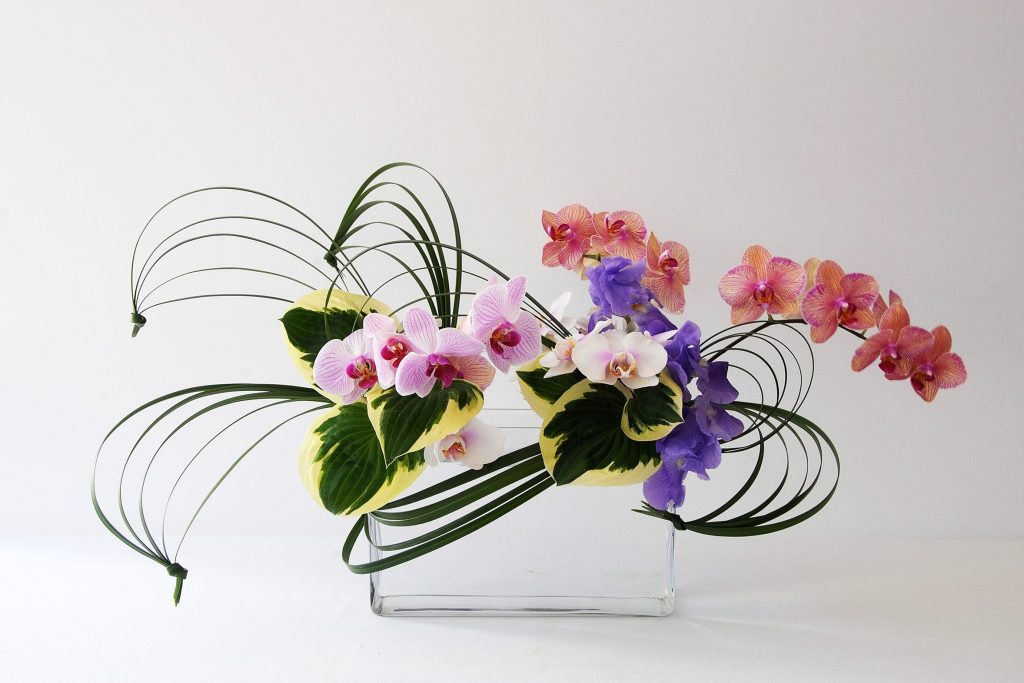
Ikebana: Japanese flower arranging art dating back to the 15th century. Art form that reinterprets the beauties of nature with an elegant aesthetic understanding. the art of flower arranging Basically, we must have love and respect for nature as well as a…
If you ask who designs the landscape best; I think all living creatures in nature except humans. They are more successful than us. They determine their own habitats without harming our planet. We humans, on the other hand, destroy the heavenly piece…
There is nothing more enjoyable than creating a classical garden by arranging only materials that could be found in the natural world. There is no greater joy for me than expressing Japanese aesthetics and values in a limited space and experiencing first-hand…
In my landscaping works in residential projects, I generally prefer to be inspired by the surrounding textures of the building. I reflect the plant and arrangement details that best match the design I created from the existing texture to the project. comparison:…
The most important and perhaps the most valuable difference of landscape from other design disciplines is the extraordinary privilege of creating spaces and establishing time with alive, natural plants and also inanimate materials. Whereas in architecture, this can be possible only with…
Public space is a medium that always open to surprises. Often what you designed may not correspond to what actually happened. In this sense, public spaces are very dynamic spaces in terms of usage diversity. This is perhaps the best part of…
In a project where the building density is very high and the landscape areas are limited, it becomes a bit difficult to associate the building with the landscape. In such cases, it can be a valid method to inject the landscape into…
Colour has played an integral role in the evolution of humans, such as recognising nature's warning signs of red or yellow in animals / plants, or the intensity of dark grey rain clouds before a downpour. The earliest colours used by humans…
Color is a design element and one of the characteristics of materials in architecture. It makes things visible; differentiates an object from its environment; identifies elements within a composition; adds a new dimension; recalls a new…
I use colour when it is brought or suggested by materials, I never try to force the tone. I love desaturated colours, like the ones you can only obtain with natural ingredients. I'm always looking for natural palettes that blend into one…
Color is one of the most important factors affecting the perception of space. The color you choose for design is very important for the user's perception of space. For example; for some, a place dominated by dark colors may have a depth…
I believe that the combination of color with form ensures the integrity of the design, and therefore I prefer to use bold colors most of the time, of course, to the extent that we can convince our clients. The most important point…
Social and cultural projects, in particular our schools and education buildings employ colour to good effect. Whether to recognise and respond to local context, to aid wayfinding, or to offer a sense of cohesion and belonging, considered…
Colour is a versatile tool that can be used to adjust the energy of a space. It is all around us and is influencing our energy patterns every day. In feng shui design, colour can be applied in a simple and straightforward…
Color is one of the most beautiful phenomena of our existence. Color is life and for me, color is a way of dealing with and touching our emotions, our psyche, and our spiritual being. Some colors are strong, some are soft…
Colour is used to influence us through our behaviour and mood, making us move more quickly or slowly, feel more relaxed, eat more, increase productivity and even spend more…
In 1930, bolstered by his experience as a painter and architect, Le Corbusier created a wallpaper collection. Based on the 43 colours most often used by his workshop, he theorised that, if "an oil painting sold on a roll" was produced on…
Using a combination of colors is essential for me in order to feel the depth, rhythm, and of course emotions. That's why I use a multicolor palette in all my projects. The first thing I decide when I start a new design…
In feng shui, working with colours and materials allows us to attune the energetic flow in spaces to the needs of their inhabitants. We use colours and materials to influence and harmonize the flow of energies. We look at what the underlying…
Color is a way to achieve a certain feel and look of the space which communicates the brand, the design and creates an atmosphere that suits the area's purpose. For individual work rooms, we always choose a muted color palette in order…
An integrated work with the landscape provides a direct contribution to the spatial spirit created in addition to the other technical requirements of the architectural project. Landscape is a direct part and complement to architectural design. comparison: architecture, landscape The relationship of…
Landscape is a very broad and deep subject. Regarding the size, it means the place where a person can perceive the light, air, flora, fauna, seasons, wind, heat in which he can exist and integrate with it; that is, first of all…
Shaping space and furniture design according to the needs and expectations of today's workforce is the primary factor of increasing productivity. Besides trends, it is the right starting point to get to know the employee profile to analyze their demands well.…
The link between colour and emotion entails the assumption that there is a well-known established fact: colours have the power of influencing everyone and their moods in the same way…
Interior space is like a painting, where everything is connected. The color palette and the function of the space are together on this white canvas. Choosing "the right color palette" and bringing balanced and harmonious space is like a play…
Sustainability has always been at the forefront of our work. Our approach to sustainability revolves around our focus and emphasis on local context-ecology, location, history, geography, etc. as the basis for design. Our plans enhance the foundation for sustainability through the various…
We are striving for a form of architecture that is equal to the challenges of our time. A form of architecture that is mindful of the way it reflects our responsibility towards our children. Such architecture must have a positive relationship with…
For me, sustainability relates to social interactions. I believe architecture now is positioned to sustain better living conditions by reorganizing urban fabric, designing flexible systems, redistributing wealth and resources, increasing time-efficiency, reducing environmental impact, influencing institutions, lifestyles…
Biomimicry involves learning from the many remarkable adaptations found in biological organisms in order to inspire new design solutions. It is based on the way functions are delivered in biology rather than just looking at forms and in many cases can lead…
Urban design for sustainable cities starts with remembering what the primary outcome of a sustainable design is. It is about the creation of human environment. We have to remember all the technical tools and processes we use are "vehicles" to get an…
We are seeing many global problems. Climate change, designing for climate resilience, having enough food for people in the world, transportation, clean water. Biomimicry can contribute any of these. Our approach is not just about the designs that we can do but…
Biomimicry provides us with a design process, evaluation criteria, and endless examples of sustainable design alternatives that can address our most pressing problems and work together to create a sustainable future. As a side benefit, we can use nature's rules for creating…
Environmentally conscious and sustainable design demands integrative thinking. Sustainability in use and production... I attempt to bring this philosophy closer to the end-users, by working at the intersection of beauty and sustainable design. The products should be of lasting quality, easy to…
I can't remember how many times I had answered and given interviews about sustainable architecture so far. At the end of the day, we have come to today's situation since for years we kept discussing the sustainability of buildings rather than the…
Moscow is a very eclectic city: buildings disparate in style were created over many centuries. Here, centuries-old buildings coexist with Soviet constructivist structures, Stalin’s skyscrapers and high-rise towers of business centers…
The real wealth of Amsterdam is less its being shaped in the omnipresence of water but is the open and tolerant social character. For centuries Amsterdam has been the centre of the international trade and cultural exchange. Historically, it all…
Chicago is one of the most diverse cities in the world with a mix of local, national and international residents, many who moved to Chicago because of the number of factories based here. Chicago's central location, rail hub and easy access to…
Every structure needs to be renewed over time to meet the requirements of the day. Although it is possible to renew the buildings that retain their original function without making significant changes, radical interventions are needed for the re-functioned structures.…
Each company has its own disciplines, working conditions, and principles. It is necessary to perceive them well, to analyze them and to create a particular working culture of each company. Because offices currently have become a living space where people spend much…