Completed Buildings | Creative Reuse
ArtIstanbul Feshane
Kurtul ERKMEN
Founder | KG Architecture
Founding Member & Chairman of the Board | Aura Istanbul
Seda ALTAN
Director | Aura Istanbul
WAF 2024 Representative | KG Architecture
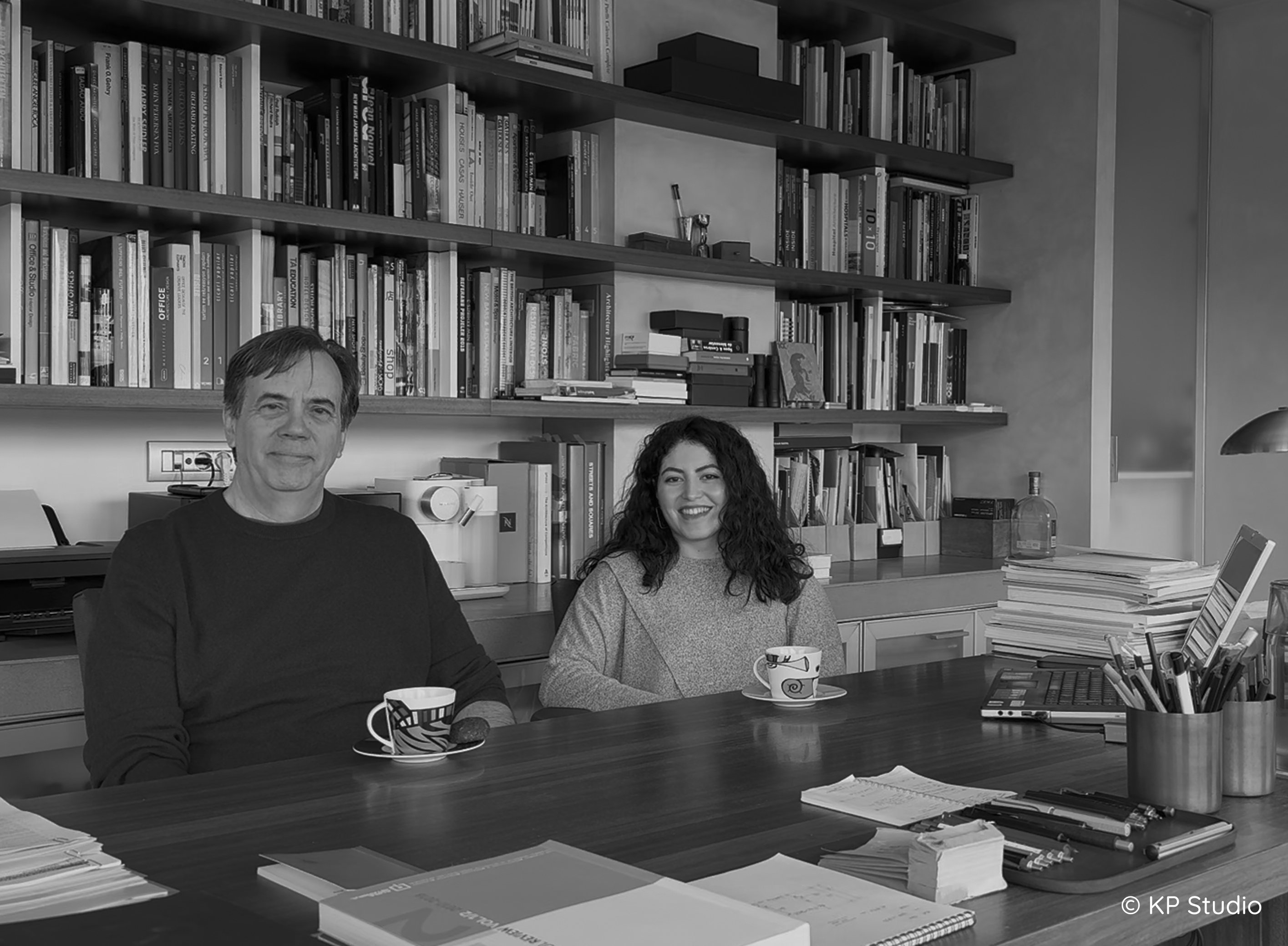
being a finalist & motivation…
Kurtul ERKMEN
When you are a finalist, winning first place is a wonderful feeling for an architect; but being a finalist and having the opportunity to present your project there is like the Olympics. You may not win first place, but you shouldn’t miss the opportunity to go and present your project there. That’s why we submitted projects from time to time. We were finalists three times in total over three different years. Our most recent finalist project was Artİstanbul Feshane, which competed in Singapore.
I find WAF valuable not only for submitting projects, becoming a finalist, and possibly winning the category, but also as an architect to see what has been done around the world in the last year and how our colleagues in other countries have worked. I would gladly go as a spectator too.
Seda ALTAN
It was very exciting. We had the opportunity to present and share this important structure about Istanbul with the world in Singapore.
highlights…
Kurtul ERKMEN
Many projects are submitted to WAF, finalists compete, but we do not know how many projects were submitted in that category; the WAF committee knows. We hear that dozens, even hundreds of projects were submitted. It is customary to hold a welcome party the evening before the competition begins. You meet the attendees there, and if you have old acquaintances, you meet them. Paul Finch also provides some information. He had stated that over 3,000 projects had been submitted prior to the WAF held in Amsterdam.
Simply having a good project is not enough to be a finalist in a category; it must solve a problem and define it well. I believe that those who stand out and become category winners are usually projects that identify and define a problem for themselves and solve it well. Only projects with a story stand out.
It is encouraging that the focus is not on cosmetic beauty. Because architecture is a profession with a somewhat tarnished reputation in this regard. You can sometimes present your project through beauty or cosmetics, with good facades and good photographs. But ultimately, there is a jury consisting of three people and architects. Therefore, they need to have reviewed it beforehand, and the questions they ask should be aimed at understanding. I believe the jury members review the digital projects that have been given and distributed to them before entering the competition. Because if you review them and come, you can ask better questions. Just listening to the presenter for 10 minutes may not be enough to get into the project. I think the jury members should review the project beforehand and come to such a serious organisation.
Of course, so many categories means there are a lot of jury members. It is possible to say that each jury member conducted an assessment; however, it may not be possible to say that they conducted a sufficient level of assessment. I competed several times; the first category we competed in was the office category. In the office category, none of the projects I thought were good came first. I think a mediocre project came first. Let’s say the jury favoured it that day. The following year, when Seda was in Amsterdam, the category we entered was Production-Energy. The winner was the Macallan Distillery in England, a building I had the opportunity to visit a few months ago. The new Macallan Distillery building was truly excellent, and they presented the project well. It was the right decision to choose it as the winner.
preparation…
Seda ALTAN
We presented the Artİstanbul Feshane Project together with Merve Kaplan (Project Manager at KG Mimarlık, who was involved in the project we submitted last term and is familiar with it). Naturally, we had the opportunity to work together before going. We met for a few days in separate sessions. The presentations were sent well in advance. If I’m not mistaken, the presentations were sent in August.
We had a five-minute slide presentation containing the project details and visuals. We also used a video for the five minutes. The project client, Istanbul Metropolitan Municipality – İBB Heritage, had previously prepared a longer video covering the entire restoration process. We were able to use a five-minute version of that video, focusing on the parts containing more architectural details. The preparation process was as follows.
We hadn’t added the presentation notes, so we fell behind during the presentation, but we recovered very well. The slides finished in exactly five minutes, and the video played for five minutes. Then we moved on to questions and answers. We tried to convey the story of Feshane well. We believe we successfully conveyed its importance for Istanbul and that it symbolises a major transformation at the threshold of the Ottoman-Republican era. One of the jury members said they wanted to visit Istanbul. After watching it, they said they felt as if they had been transported to Istanbul. I went over to them afterwards and invited them to Istanbul. We were very pleased that they felt the spirit of the project. However, this category was very challenging; there were some very serious projects competing alongside us. Apart from that, Merve and I had already noted down possible questions that might come up during the preparation process. Most of the questions were on topics we had anticipated.
Kurtul ERKMEN
I also told Merve and Seda that if I were them, I would ask this question, these questions might come up, so work on these questions. After all, you now know what the jury pays attention to, what they ask.
Seda ALTAN
The most interesting question was when a jury member asked us to explain Haliç and its context in more detail. I think they asked because they didn’t know Istanbul. We tried to explain a little.
Kurtul ERKMEN
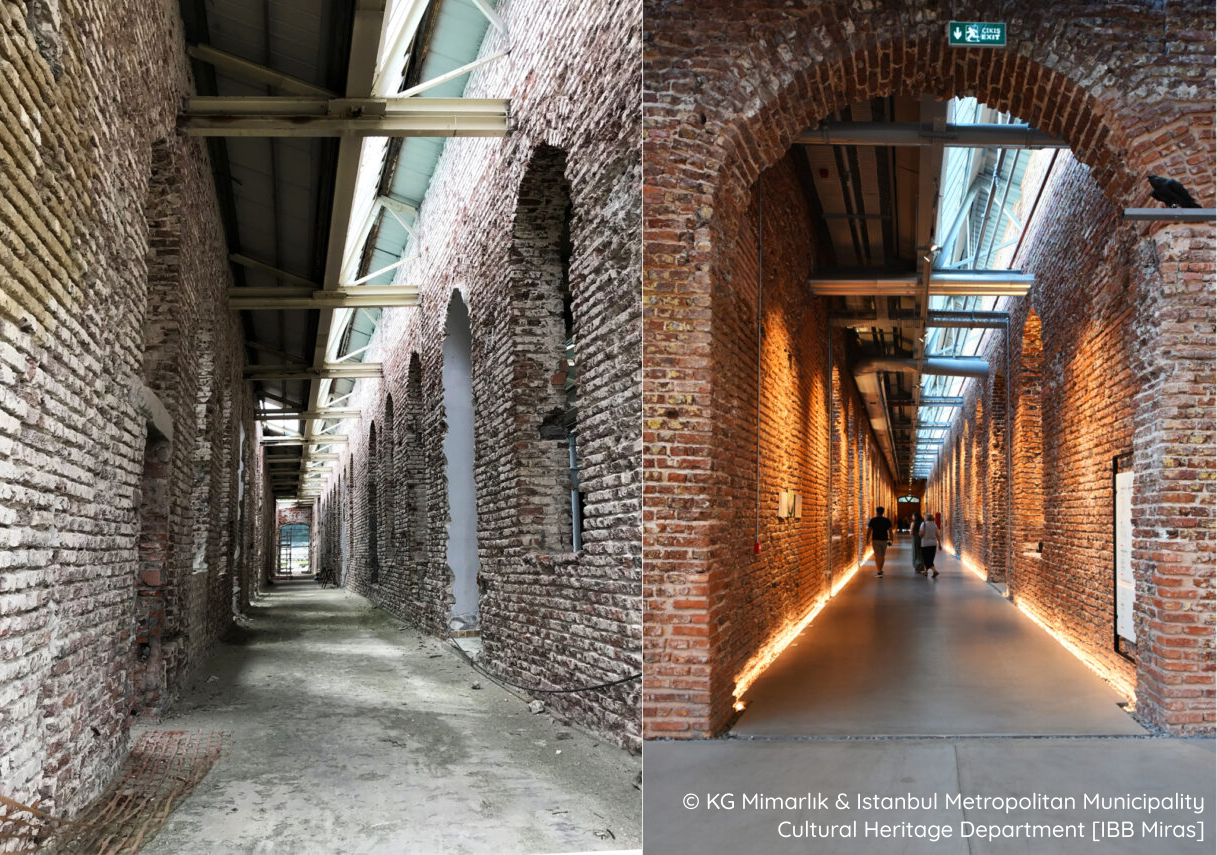
The video also included images of Feshane before its restoration. There was no roof, the floors were mud and dirt. Only the walls and columns remained. In the project, we explained how the building was gradually restored to life from that state, first transformed into a shell appropriate to its original form, and then how the various functions were incorporated into it.
Here’s the thing: An architect friend of mine once said, “Nowadays, it’s almost as if photographs are competing in competitions, photographers are competing.” There’s some truth to that. The impact of a well-taken photograph cannot be ignored. We are all, after all, part of an aesthetic art form, and a photograph that looks good, or even sometimes makes the building look better than it is, works; any jury would be impressed by this.
For example, in competitions, I haven’t seen many plans or sections being explained; it rarely happens. You don’t spend most of the time allotted to you explaining plans, sections, or facades. You don’t go over drawings; you go over photographs. If you explain with photographs, the result is the impact of the photographs, their success. In some countries, they really take good photographs. A beautiful photograph is an advantage. If I were on the jury, I would be impressed too.
Seda ALTAN
In relation to the theme, I also think that we are increasingly seeing themes that focus on real problems rather than the dangerous aesthetic aspect of architecture that Kurtul Bey mentioned. Problems that cities and architects face…
about WAF…
Kurtul ERKMEN
WAF is a long-standing and highly prestigious competition or festival open to the whole world. As its name suggests, the World Architecture Festival is not just a competition, but also a festival.
In my opinion, one of the most important aspects of the festival is that architects from around the world, colleagues, can communicate with each other and listen to the architects themselves talk about their projects.
There are various halls, hundreds of projects competing, different categories, and you can watch the projects in the category that interests you for three days. During coffee and lunch breaks, you can easily go and talk to the architects of projects that interest you or someone you want to meet in a relaxed environment, get to know them, and perhaps ask a few questions about their project. Architects from around the world come together, including some very well-known ones. Young people also come, but generally, when we look at the projects competing at WAF, there is a certain level, and I think it is a serious competition.
Singapore… Dubai… Istanbul…
Seda ALTAN
Singapore is very interesting. The first thing that comes to mind is that it’s like a playground for architects, completely different. Projects that are completely disconnected from their context have come together. Of course, it’s very impressive. Gardens by the Bay is incredible; I don’t know if there’s anything like it anywhere else in the world. The area where WAF was held was right next to it.ght next to it.
There are climatic challenges, and this has shaped the architecture; as much as possible, all areas are air-conditioned. In fact, when you go outside, even when it’s not raining, you feel like it’s raining because of the humidity. We went in November. For us, November was autumn weather; however, we experienced an interesting monsoon climate there. I can actually summarise my experiences as follows: an interesting geography and seeing how architecture has been influenced by it. I described this place as a playground for architects because it is an area where very tall buildings and new technologies can be used. There are already numerous projects produced by the world’s most important offices there. The gardens on the mezzanine floors, nature and the city intertwined, and Gardens by the Bay seem to permeate the entire city when viewed from a distance. There are many projects I find creative in terms of sustainability and the use of technology, but can I see myself living there? No.
Kurtul ERKMEN
We took a trip to Dubai. Four architect friends went to look at the buildings. From there we also went to Abu Dhabi. Seda described Singapore as an architect’s playground. Dubai and Abu Dhabi are like a skyscraper exhibition. Models have been made and placed haphazardly all over the city. Because apart from being tall and big, they don’t really connect with each other. So I can’t speak for Singapore, but in Dubai, for example, there aren’t really any urban spaces (partly due to geography), because life happens outdoors. I had been there before in June, and at the beginning of June it was 40 degrees and above, so how do you explore, how do you get around? You can walk around in February, but no one does, as it’s not a habit. People are inside the large shopping centres, restaurants, and cafés. Most indoor spaces are stylish and comfortable. But there is no urban space, fabric, or public area formed by buildings standing side by side.
Seda ALTAN
It may not be entirely applicable to Singapore. I can see they have worked very hard on this. The entire Marina Bay Sands project is a kind of shopping centre, but on the other hand, it connects with the coast, the walkway connects the entire coast, and the bridges and footpaths have been very holistically designed. There are already many museums in the same area, and attempts have been made to connect them with public spaces. One thing that can be said about Singapore is that it is actually very multicultural. Four different languages are spoken, and there are even four different languages in the metro. It is a place where you can communicate and travel without any difficulty in English. The hotel we stayed at was just like Chinatown; there were Buddhist temples, there were mosques for Muslims, it was a place like that, life was very interesting. On one side of Chinatown, there are two-storey buildings that I would describe as older, structures that we could call historic within Singapore’s history, and on the other side, there are huge buildings designed by international architectural firms. That contrast is interesting but not disturbing. I think I feel this way because the solution is very good. In Dubai, the distinctions may be a bit different and more pronounced.
Kurtul ERKMEN
We are somewhat accustomed to what Seda mentioned, even in Istanbul, where different layers coexist within the city. That is what we know, perhaps even a formation that contributes to the city’s dynamism… In Dubai, I believe there are few places where we can trace the history, the traditional, or the architecture. In Abu Dhabi, too, it’s not really possible to talk about a traditional settlement. At least, it’s not visible. Now you’re talking about Singapore, and you see a multi-layered fabric. Like Istanbul. It’s very easy for someone wandering around Istanbul for a few days to understand that it’s a city with many different faces; it doesn’t require any special effort. If we gave someone visiting here three neighbourhoods to visit, they would see how different they are. Therefore, a city’s history creates and requires this. If we’re talking about a city that looks to the past… This place was the capital of three different empires, a capital dating back to before Christ. There’s Byzantium, there’s Rome, there’s the Ottoman Empire, there’s the young Republic… It’s only to be expected that a place where so many different cultures have blended together would reflect that. The issue is not losing it, preserving it, continuing it, sustaining it. Otherwise, life goes on, new buildings will naturally be constructed, the population is growing. As you know, Istanbul’s population is officially around 16 million, perhaps 20 million including those living within it, such a metropolis. When you look at Europe, there are very few, maybe three or four, we can count them or we can’t…
WAF 2025 & Miami…
Kurtul ERKMEN
I haven’t seen many projects coming from America. In the Re-use category we competed in previously, a project from Canada came first. The selection of Miami could be a tactical move to increase the number of projects coming from the American continent.
Holding it in Miami could be an incentive for projects to come from countries on that continent and even from South America, such as Chile, Mexico, and Argentina. In that sense, bringing together projects from more countries, more architects, and more diverse geographies at a festival has always been the intention of the festival organisers.
The vast majority of participants come from either Europe or the Far East. One reason for the Far East representation may be that it started in Singapore. Consequently, it has established itself in those regions. They may now be aiming to create opportunities on another continent; we will see the projects when the time comes.
Seda ALTAN
Miami is a very different geography from Singapore, but it is one of the cities most exposed to climate change within the United States. Therefore, I think the city it is located in may influence the theme, the main framework, the talks and the panels.
As you know, the project selected as Building of the Year in 2024 was a school. The school is a project entirely focused on social participation. The entire design process was based on that, on the needs of children and their families. It is a project that brings together different communities within Australia. So, I don’t know, perhaps this issue of social participation will continue in a sustainable way in America. Will this focus on such current urban issues continue? I hope it does and that America will also focus on these issues.
Kurtul ERKMEN
Speakers and keynote speakers are also important. Who will be there, how will it be, which speakers will focus on which topics? Those choices will definitely have an impact. Ultimately, it’s a festival, and we shouldn’t expect it to change everything by attaching too much meaning to it; it doesn’t have that kind of power. But perhaps it highlights the importance of discussing the topic. Even if architects in that region don’t submit projects, it’s very easy for interested parties to come and participate.
If we were to estimate the number of architecture firms that have gone abroad over the years, we could say there are around 20. There are various reasons for this. If it were held in Istanbul, perhaps 100 firms would go to observe. Assuming that the location is conducive and facilitates participation, it is easy to predict that the participation of American architects or firms working in America, at least as observers, would be greater than in previous festivals.
development & progress of WAF…
Kurtul ERKMEN
My first trip was to Barcelona back in the day… Generally, the format is that WAF goes to a city and stays there for two years. Singapore, Barcelona, Berlin, Amsterdam, Lisbon, then back to Singapore. If we assume they won’t change this format and go to Miami in 2025, I reckon they’ll stay in Miami for two years too. In fact, it’s clear that it follows an intercontinental route. Therefore, after Miami, the next stop could be Europe. I wish they would come to Istanbul, so we could host all those architects here, which would be wonderful. Of course, Paul Finch decides that. I was in Barcelona the year Hasan and Kerem (Erginoğlu Çalışlar Architecture) won first place in their category. What stands out most in my mind is their category win and how delighted we were with this success. When we go to these events, a Turkish colony forms there. Consequently, we were a large group in Barcelona too. The day before the competition, we were boosting Hasan and Kerem’s morale. The next day, we were celebrating, rejoicing as if we had won ourselves. The festival provides a platform for establishing and strengthening these connections. WAF is also developing itself, adding new categories. There used to be fewer categories; however, in recent years, a category called Future Project has been added, where unfinished projects can also compete. Previously, the emphasis was on finished, completed buildings, and we have always submitted our completed buildings and become finalists, placing importance on that. The Future Project category offers an opportunity for some projects that may never be completed. There are good projects, but inevitably, in today’s technology, it feels like the competition is a bit about visuals [renderings] in that category. Because with projects that won’t be completed, you can be a bit more free and try out ideas that are difficult to realise; I get that feeling. Mind-opening projects come along, of course. Sometimes I’ve seen projects that won first place in the competition even though they weren’t completed. They were genuinely solid projects, feasible to implement. In Turkey, we always have this reflex: you enter a competition, you win; but then you pray, ‘Hopefully, the resources will be found and the project will be done well.’ Otherwise, we have many memories of colleagues who won competitions but whose projects remained on paper.
Seda ALTAN
I first attended WAF in 2019, when it was held in Amsterdam. That year, both Mr Kurtul’s and Mr Sinan (İzgi)’s projects were competing. Mr Sinan was in the Future Projects category. Of course, Amsterdam has a different atmosphere, so I also find it valuable that this festival is held in different cities. Amsterdam had a very different atmosphere. In Singapore, it was completely different, with an atmosphere open to Asia. In addition, different disciplines of different qualities and scales come together. WAF’s categories and awards also vary accordingly.
Kurtul ERKMEN
Different cities have this advantage: if we are going as an office, WAF usually lasts three days, so we set aside about a week for ourselves. That means we go at least one day before the competition, maybe two days before. If you are submitting a project, you need to do some preparation and work there. Sometimes they invite you early for technical checks, and you do the technical checks before the halls open. After the competition is over, we usually stay for at least one or two days, depending on flight times, and explore the city. Because we don’t leave the festival area for three days. In the evenings, we only have the opportunity to go out for dinner, and there is no chance to see the city during the festival. We want to explore the city, see its architecture and lifestyle, and get to know it by extending our stay a little before and after the festival. Of course, some of our foreign architect friends from Europe leave after the festival, perhaps because the distances are shorter. We can say that we enjoy both the festival and the city.
Seda ALTAN
I have a complaint. The programme is very intense, it’s impossible to keep up. There are completely different projects competing in every room, and you want to listen to them all. There are 17 crit rooms. And the world’s best offices are there giving presentations. On the one hand, there are talks and panels that really interest me. There are parallel sessions. All the talks on the Main Stage were very good. Both academics and keynote speakers are guests, participants from truly valuable offices.
Kurtul ERKMEN
Each hall has a different category competing with each other. You’ve done your homework before going, but there are overlaps. But, for example, this also happens to me a lot; you enter a category, watch a project, and then another project comes along and presents. That can be very interesting too. One such project caught my attention; we happened to walk into a hall in Amsterdam where a Polish group had designed a Building Research Centre (I think it was a research centre commissioned by the Polish government) in the South Pole region, and they presented it. It had been built. How would they cope with temperatures dropping to minus 30 degrees? What materials, what kind of architecture, and how would the materials get from here to there? Everything had to come from Europe, from Poland. It was invaluable to hear the experiences of architects who had encountered a situation we wouldn’t face every day, a situation with an interesting story. That day, I wrote down a project in my profit column.
Seda ALTAN
The good thing is being able to see projects from different geographical areas. As Mr Kurtul said, we have the opportunity to see building designs in climatic conditions that we would find very difficult to encounter ourselves and to hear about the process from the architect.
From the perspective of young talents, apart from the Student Charrette, there are no other modules in which students can participate. Otherwise, it’s a matter of paying the fee, buying a ticket and coming. So, let’s say it’s actually closed to students and young professionals. Because there is no very low ticket price, considering Turkey’s economic conditions. Maybe that’s not the case for the world. It is difficult for young people, mostly from architecture offices, to meet someone who has come alone.
Kurtul ERKMEN
Young people can enter if they are assigned to the halls. At every jury session, there is a serious team that alerts you about the time, acts as a guide for you in the festival area, and can answer your questions. This team is very large and consists of young people. Since they are on duty, their participation is free and most likely based on volunteering. I don’t know what they think about increasing the participation of young people, especially students.
If there are criticisms regarding changes to WAF or its development, I believe that not everything needs to be changed. Why change it? Just make it better, improve its quality. WAF has its own festival format. Sometimes trying to expand that format can dilute it. That also carries a risk and danger. You pocket what you see, but you regret what you missed over the three days. This actually gives an idea about its quality. Therefore, I think it would be beneficial for WAF to look at how it can improve its quality without getting caught up in the trend of changing everything, such as how to change or improve itself. The jury should be qualified. So far, it’s not bad. You trust WAF when you submit your project, and you trust the jury when you appear before them.
There are comfort issues. We went to Amsterdam, and the first day was freezing cold, everyone sat in their coats. Clearly, they hadn’t turned on the heating the day before, and the ventilation system was working for the first time that morning. We went in the middle of November, and Amsterdam was around 0 degrees. It was cold on the first day, and everyone complained. It only warmed up on the second day. These are manageable things, ultimately, and they’re more about organisational skills than the format of the event. Other than that, whenever I’ve been, it’s run smoothly.
Seda ALTAN
When attending new events, one can clearly feel the difference in organisation. It’s a very easy organisation in terms of communication; the WAF application, etc. Although I think the WAF application needs to be updated (it could work better, in my opinion), being able to quickly obtain a person’s contact details is very efficient, but I think more time is needed to socialise. Because there’s no time left when running between Crit Rooms. The vast majority of participants come to give presentations themselves; the day is spent preparing for their own presentation, and if they have a presentation, they spend the day on that. There isn’t much time left, and there are meetings at the stands. This year, there was a Turkish Stones stand from Turkey. I think it was because they were there that the ambassador hosted us. Turks are hosted in Singapore and at the ambassador’s residence.
It seems like there were more events for socialising in Amsterdam. There was an event every evening; either we were invited to a dinner or there was an event at Ben van Berkel’s office. It wasn’t as varied in Singapore; it was more about meeting at the stands. Because the events were so intense, there wasn’t time for more intimate gatherings.
Kurtul ERKMEN
What suggestions do we have regarding WAF? I find this lacking; this competition has been held for years, but there is no good data on the competition’s participants, projects, and winners. They could publish a book about it every year. Around 15 projects are entered in each category, and if there are 10 categories – which I know is a lot – let’s easily calculate that there are 150 projects. There should be information not only about the winning projects but also about the participants. If I entered the competition, I would want to remember my category later. I say there are good projects, but where will I find them if I didn’t write down their names? At the very least, they could put the presentations of the finalist projects online every year; it’s not that difficult. If they say that posting the presentations would take too long, 10 minutes each, and they can’t upload every project here, they could post explanatory reports and sheets in formats suitable for the projects themselves (because we don’t send videos to enter the competition). For example, one year I went—I don’t remember which one—they had an exhibition. Not just of all the participating projects or the finalists, but a hall filled with hundreds of projects, and they had an exhibition of that. Creating such a database would increase the useful part of the work for past and future years.
Seda ALTAN
Offering better opportunities to participants and winners of the competition, the broadcast archive is both a good idea for those who couldn’t attend and a way to honour those who did. In other words, it makes their presence that year visible.
Kurtul ERKMEN
Moreover, as we said, we couldn’t watch every project, we couldn’t enter every hall. There are many halls at the same time, you have to make a choice. The competition is over, who came first is another matter. But all those projects were obviously selected and were good projects, hundreds of projects came from around the world, and we sat down as the jury and selected 15 projects for this category. Publishing and showcasing those 15 projects could be a good idea. There are many magazines here today. Many projects are published in these magazines, right? We still receive them, translate them, look at them, or those who wish can view them on digital tablets. Let’s see the projects because they are high-quality projects…
Seda ALTAN
One of the things I liked this year was that the European Cultural Centre came to WAF. I spoke to them specifically, thinking they were invited because they are a kind of civil society organisation within European standards, but they wanted to be there and participated; they weren’t invited. Perhaps my suggestion to Paul Finch would be to invite Aura Istanbul. Because it’s clear that it’s not just companies from the construction sector that come and participate there; now civil society organisations and similar cultural institutions are also participating in WAF. Perhaps this could be a good way to expand this area.
Kurtul ERKMEN
We’ve delivered our messages about WAF; bring them to Istanbul, broadcast them, let’s see the projects we haven’t seen. Seda, you’re saying think about what else could be done for younger people. If you look at the essence of WAF; considering that it’s an organisation spread across the world; it has a certain power, it also has the power of speech. We all have an address, it keeps coming, now we’ve started, don’t forget to come to Miami and so on. Don’t forget to come to Miami, I asked my friends the other day, shall we go to Miami, and they said the American Consulate is giving appointments for visas in 2027. If the consulate is giving visa appointment dates in 2027, what is a Turkish architect without an American visa supposed to do right now? This is a more international problem that WAF won’t take into account. Even getting a visa to Europe is a problem.
If there is a dramatic drop in the number of projects participating from Turkey and in the number of attendees from Turkey this year, it will draw attention: why didn’t these Turks come to America?
Seda ALTAN
I think one of the things that best expresses the position of Turkish architects at WAF is Emre Arolat being the keynote speaker and super jury member this year. They competed in many categories. They won an award with the Küçükçekmece Cemevi. Turkish architects now have recognition at WAF.
Kurtul ERKMEN
Murat Tabanlıoğlu was also on the super jury. It’s an organisation that Turkish architects have always been part of.
Completed Buildings | Creative Reuse
ArtIstanbul Feshane
Kurtul ERKMEN
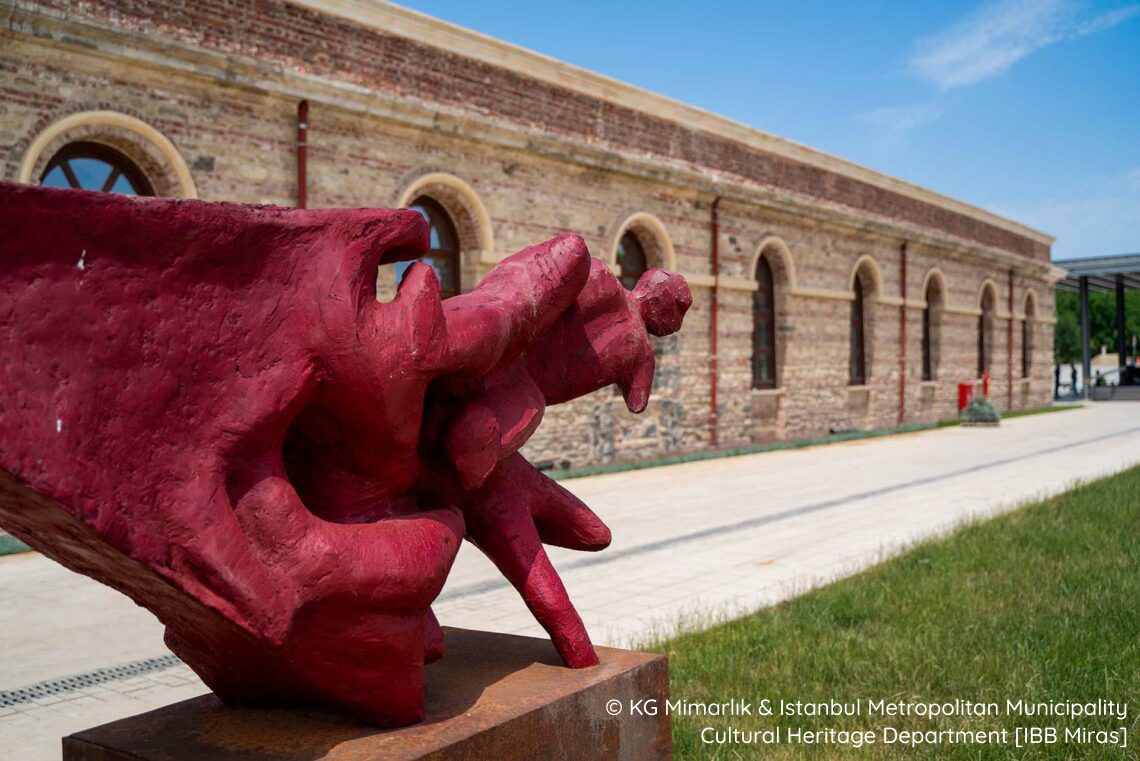
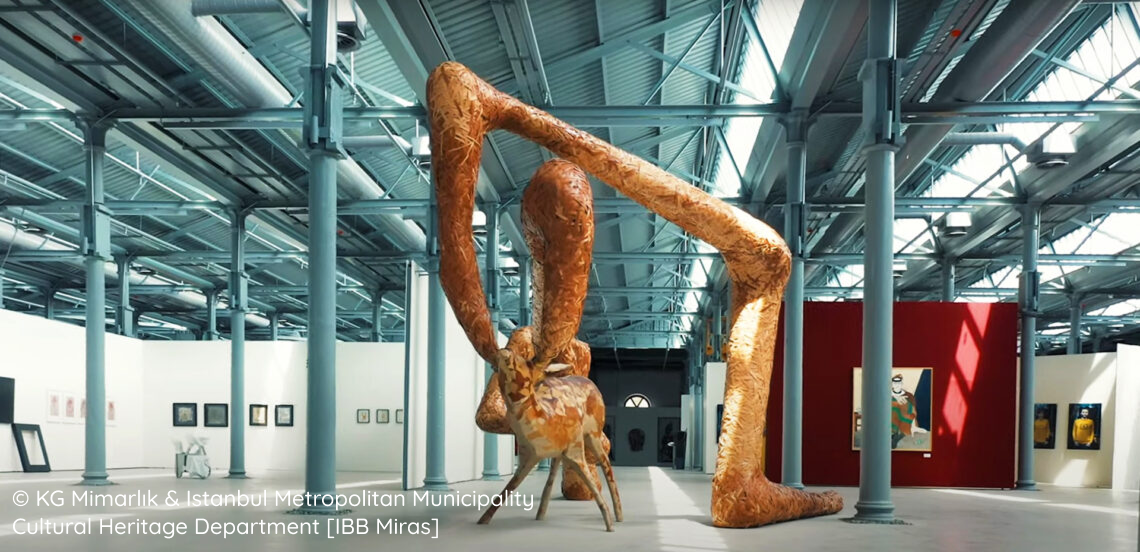
IBB Heritage has done a lot of work in this regard. They are striving and working to keep up with hundreds of projects at the same time. The important thing here is an idea. This idea is to revive Istanbul’s historical structures by repurposing them, allocating human resources, bringing in architects or interior designers, and undertaking such an organisation, which is no easy task. It’s not just our Feshane. In Istanbul, numerous historic structures have been restored and given new life. We know all their architects; they are our friends, our companions. An opportunity to create such a public space doesn’t come along often for an architect. We may build many buildings, we can build homes, offices, these things happen, but when the opportunity to build a public structure arises, frankly, I think we shouldn’t miss it. Through the Istanbul Metropolitan Municipality Heritage Department, at least the vast majority of our colleagues [have followed a path of assigning almost every building to someone else to build], so many people have had a hand in it, and we are naturally gaining experience this way. When a second one comes along, you are more experienced, and when a third one comes along, you are even more experienced.
The Istanbul Metropolitan Municipality Heritage Department must be discussing internally which project to work on and with whom. They look at its history and make their own assessment based on that. But in a sense, the project came with an invitation. During the project process, which usually takes about a year and a half, you don’t just complete the project and say goodbye; you remain involved until the very last day, until the opening. This progression is also necessary from a health perspective. Therefore, it is necessary to create a spirit of cooperation there; if you can run it that way, the project is already successful. Otherwise, we have done many projects in our lives outside of that. We have done the project, but in the end, something has come out that we don’t even want to see, or we are in a situation where we cannot intervene again. You wouldn’t even put it in your portfolio. Every architecture firm has encountered such situations, and continues to do so. I was at the opening of Ahmet Güneştekin’s Lost Alphabet Exhibition at Feshane. It’s nice to see it being used. It may be a wonderful project, but what matters is that it’s being used in a public sense. They probably keep records of it; since it opened, the number of people who have entered and exited may have exceeded a million. That gives people happiness; that’s why we did it. We don’t actually do it to take nice pictures; we get involved in those projects to produce a social benefit for the public.
Seda ALTAN
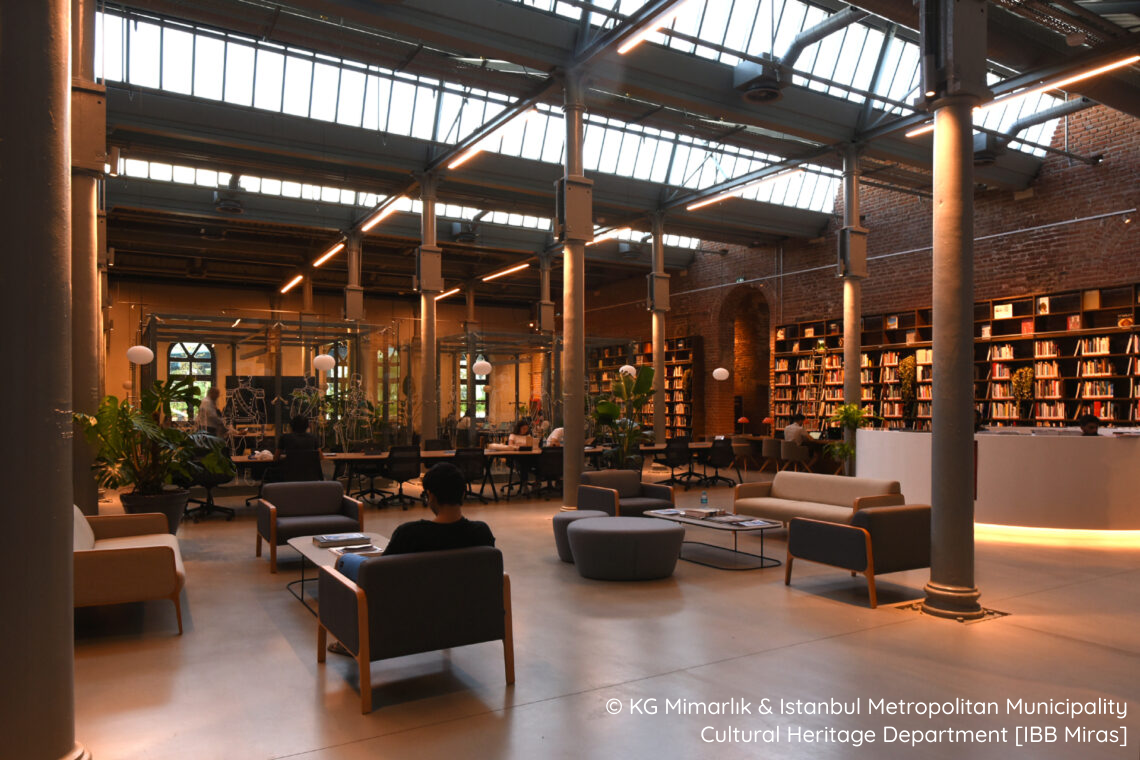
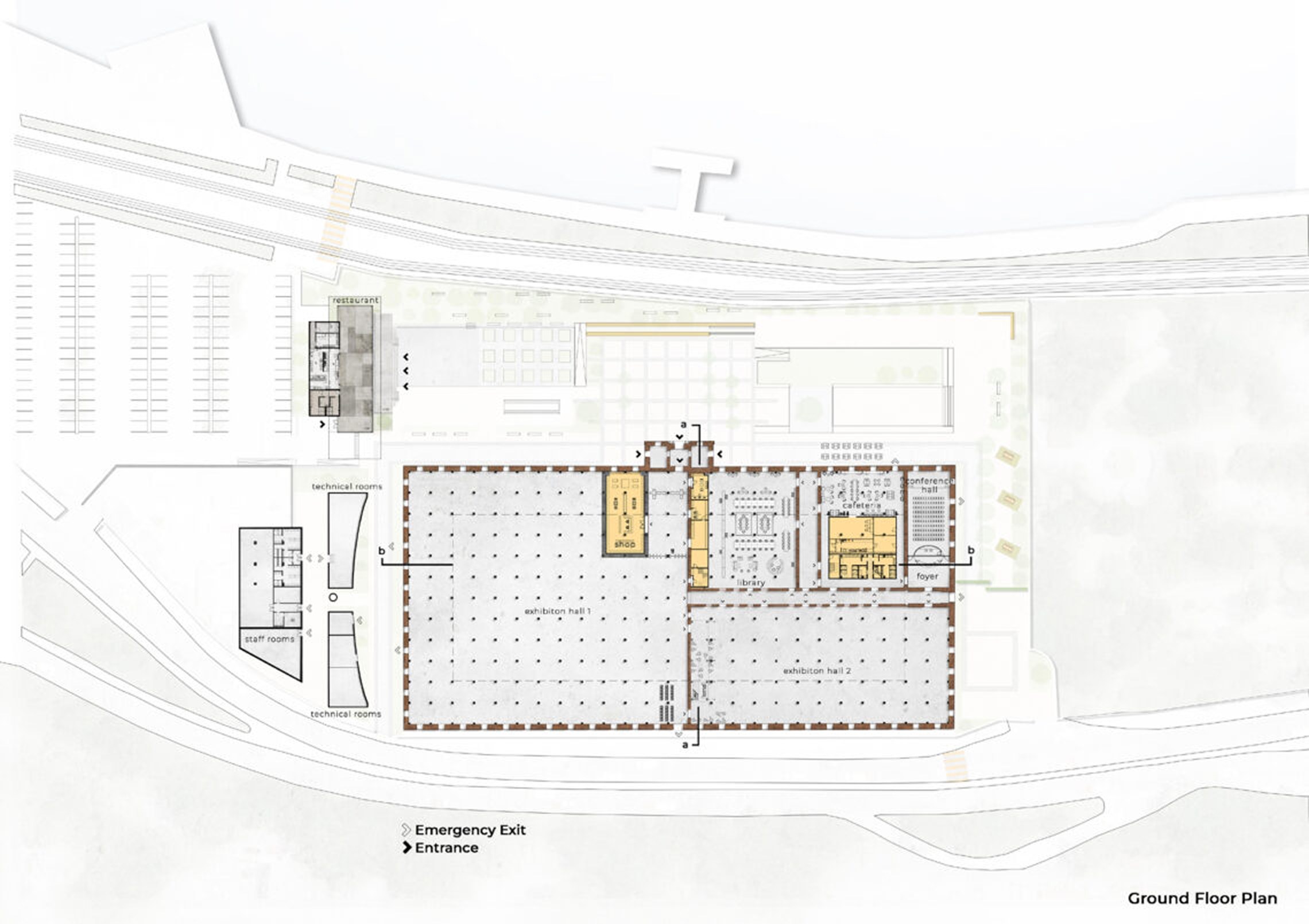
The combined functions are also very good. The fact that there is a library there, that people working there can be found while you are visiting the exhibition, that it creates interaction, that the garden is constantly used for events…
Kurtul ERKMEN
Open spaces and cafés are valuable things. You go there to relax, and you already know that people don’t just drink tea and coffee in cafés, they also work, looking at a laptop or tablet, and many people can do many things even on their phones. So working styles have changed, they’re not like they used to be, and libraries are the same. It’s not just a place to read books, it’s more than that. We have two enclosed, soundproof areas in our library for group work. They can talk there if they want, make noise, it’s not a problem. I also think they run it well. Each exhibition stays for one month, two months, three months. Good exhibitions come along, and you want to go back to see them again and again. It’s beneficial in terms of attracting viewers and increasing the number of users. Because I think one of our biggest problems in architecture is this: you do something good; let’s say you build a good restaurant, a good hotel, but you don’t always come across such a public space; if it’s poorly run, your work is useless. You wouldn’t go back to a bad restaurant or a place with an abnormal price-to-value ratio. No matter how well the architect has done their job, they’ll knock it down to zero. Therefore, I believe the business is very valuable in terms of the added value that the next owner will bring to it after us.
ArtIstanbul Feshane, organised by IBB Miras, began its life with an opening that featured over 300 works and artists, including many Turkish artists, and made quite a splash. It remained open for quite some time before closing. Then an exhibition from Tate Modern arrived. It’s not an easy thing; I know that months of correspondence, protocols, insurance, and so on are involved, and that those things are not easy. Then another series of smaller exhibitions came. Mustafa Taviloğlu’s collection, I believe, was exhibited in various places and found a home here as well. Now there is Ahmet Güneştekin’s exhibition. They are all good exhibitions. Frankly, it’s pleasing.


Location
İstanbul
Client
KG Architects & Istanbul Metropolitan Municipality Cultural Heritage Department
Status
Completed