Completed Buildings | Culture
Antalya Necropolis Museum
Erkal Architects
Emre ERKAL | Founder

highlights…
Various aspects of sustainability and social inclusion, which have been on the agenda in recent years, were again popular. I also saw that issues related to landscape and geography gained importance.
I think the selection committee jury structure is becoming more and more globalized. It is possible to see various consequences of this change. In terms of geographical location, I can say that the Asian continent stands out.
preparation…
I don’t think that every project that is produced is suitable for WAF, and I don’t think that every project that makes it to the finals at WAF is obliged to aim for an award. The points that I thought I would explain in my presentation and that I considered important in our project didn’t change after seeing the other projects. Receiving an award means being in line with one end of the dominant general agenda of that year’s event. We cannot think that every project produced in our professional life and especially the buildings built will be of this quality.
remarkable projects & presentations…
In fact, I observed the opposite: I don’t think any of the presentations stood out with big claims. But this is because the quality has generally improved.
I observed that the presentations were generally close to each other. Many buildings of high design and good craftsmanship from very different parts of the world and from very different conditions were presented in a very high quality manner.
I think the main message is that quality is rising globally.
about WAF…
As a proven organization, WAF was once again a very satisfying event. The fact that it utilized the opportunities of a developed city in Asia was effective. I did not observe a big change in terms of the competing projects compared to previous years.
WAF 2025 & Miami…
In a way, WAF seems to run with a consensus independent of the place where it is organized, but it is an organization that wants to interact with the place where it is organized. This happens better in some places; especially when it is organized in Europe, it can be said to have a deeper interaction.
Miami is a place with its own peculiarities, not exactly in tune with the current issues in the US and especially in the Americas. Nevertheless, as an event that takes place in the city, I think there are points where it can resonate. It will be interesting to see how the new agendas of the US will be reflected.
development & progress of WAF…
Although WAF was new at the beginning, it was able to integrate the actors of the transformation in contemporary architecture very well. Today, this integration has become very broad and geographically spread, and as a result, it doesn’t seem to be as effective on a small scale as it used to be. I think it has left its founding mission behind. Simultaneously with this change, the world has also changed, so WAF is a different event now.
His proposals to lead the design world in terms of projects are no longer acceptable, but I think he offers an agenda for the evolution of the profession that should be followed on a larger scale. If he can keep this up, he can maintain his valuable position.
Completed Buildings | Culture
Antalya Necropolis Museum
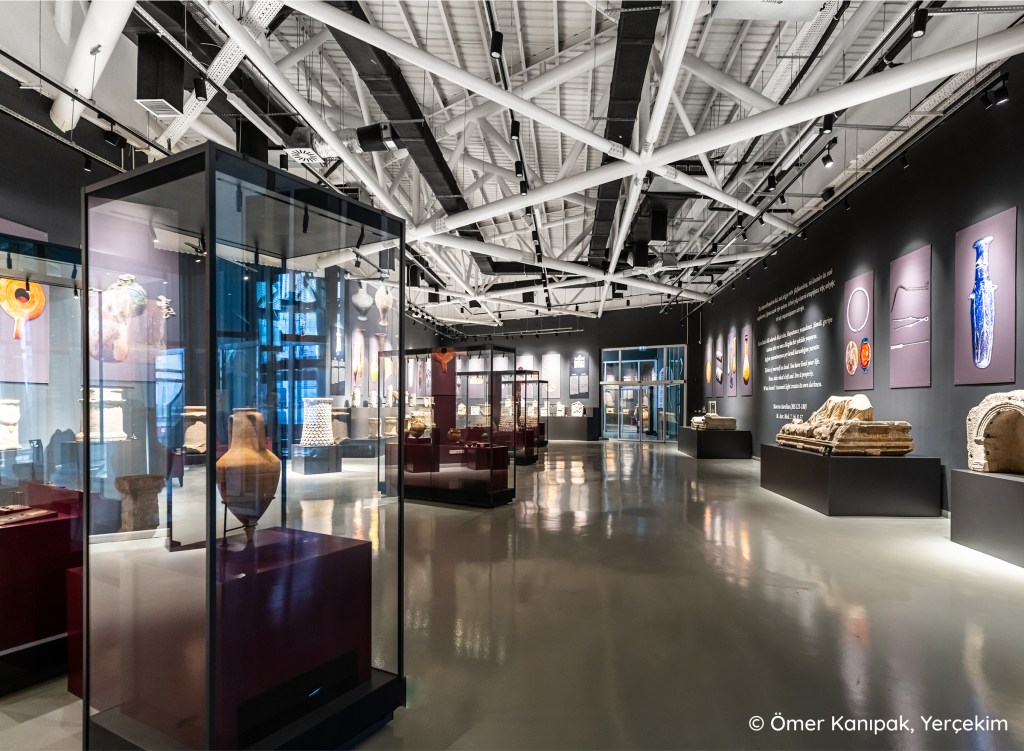
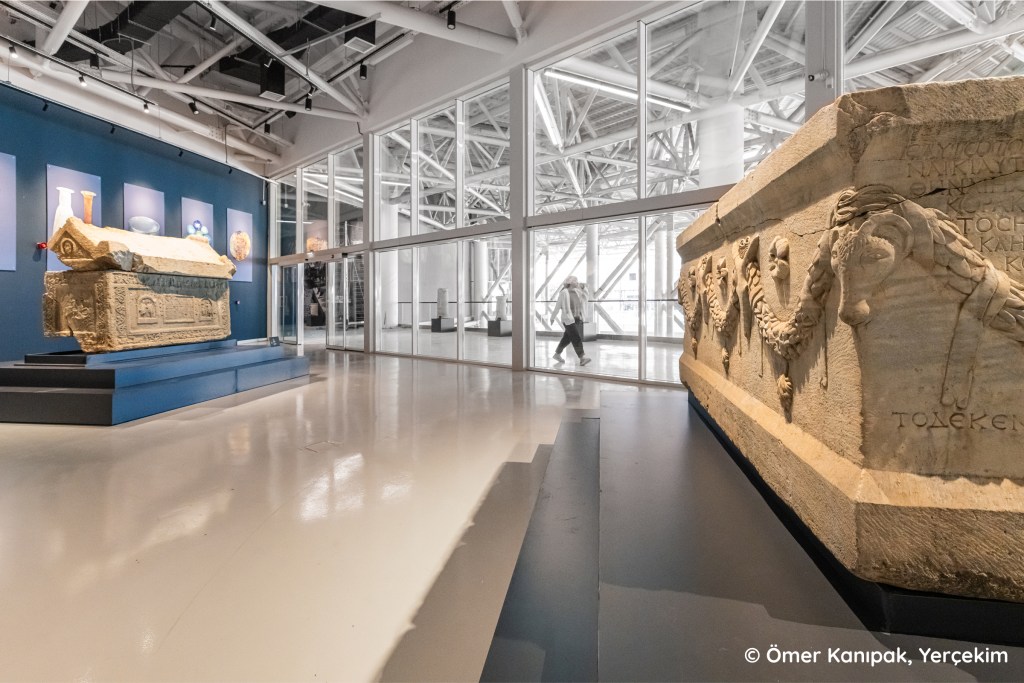
 Antalya Necropolis Museum preserves and presents local archaeological and ecological heritage as a multi-layered public space, which in turn vitalizes a critically central junction in the city fabric.
 The unearthed necropolis became the only uninterrupted stretch of the same pattern that extends in all directions at a depth of five meters beneath the modern city. The Necropolis makes use of the geological, chemical, and biological properties of the travertine bed the city sits on. This travertine bed is exposed along the Mediterranean coast, and it defines the visual character of the city with 40 meters high cliffs. Chemical properties of travertine generate interconnected pores which support a lifecycle of microorganisms. In similar fashion, each grave in the necropolis was carved by hand over generations, finding its way down and around, negotiating with neighbors. For centuries the city worked this urban landscape as a human habitat complete with a biological decomposition ecosystem, as it connects to underground water streams and the Mediterranean.
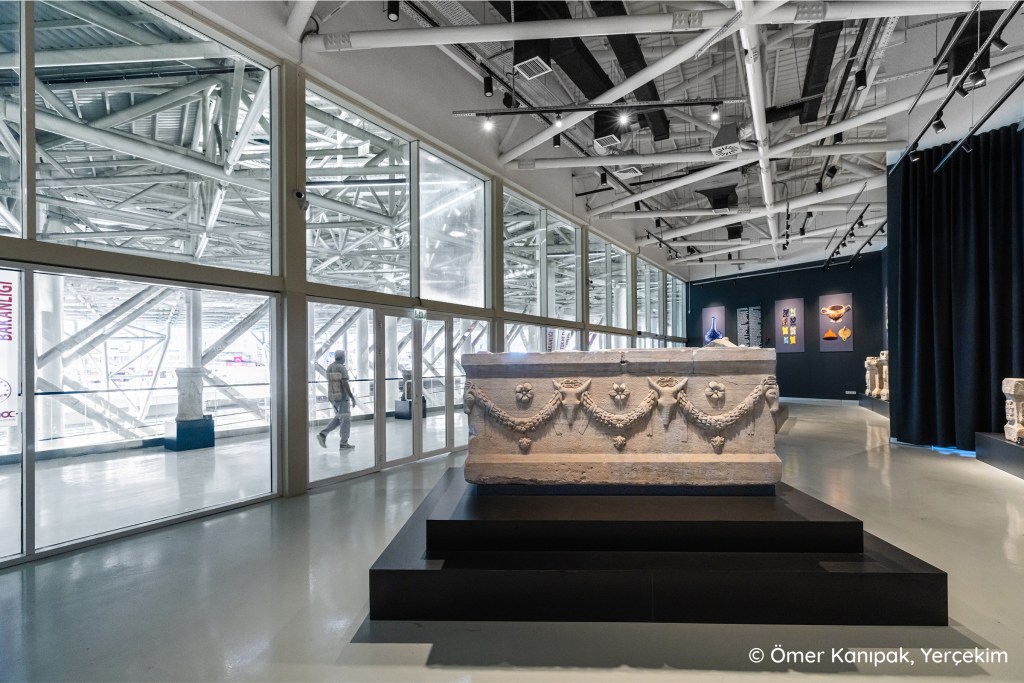
 A museum program was developed after archaeologists, geologists and anthropologists excavated the early Roman necropolis and worked on physical as well as biological remains from around 900 graves. The project has two main components on multiple layers: public access components for visiting the necropolis, and a museum of archaeology with 2000 m² of closed spaces and 2300 m² of semi-closed platforms. In addition to the public square, the urban layer that mediates the city fabric is covered with 135 meters long roof of 5850 m² which is divided by a diagonal spine gesture; the main circulation element that takes the visitors to the lower layer providing visual and tactile access. The steel structure rests on well foundations dug by hand echoing ancient methods as it extends over long spans with bridges and terraces allowing social gatherings.
 The centrally located site has very diverse neighbors: a struggling traditional metal handicrafts market, a central street with public character and a dense multi-story residential neighborhood with ground level retail and upper-floor commercial use lie to the west and north, in addition to the old quarter that is two blocks west. To the east and south a quasi-informal low-income residential neighborhood is laid on irregular street patterns. All these patches have been exerting a diverse array of pressures on the site with varying measures. Therefore, the project aims at providing connections across borders between these patches and enriching its already present urban diversity.
 The exposed necropolis and the museum program demonstrating life, death, and rituals of common citizens – rather than the noble or wealthy – is received as a symbolic reminder of the very idea of the public. The project presents this co-evolved landscape to be evidence of a unique human habitat in the form of a multi-layered public space, while contributing to the city fabric with its open and semi-open public spaces. Consequentially the diverse urban life at this junction and the city center has yet to demonstrate that it can extend east with the help of these connecting public spaces.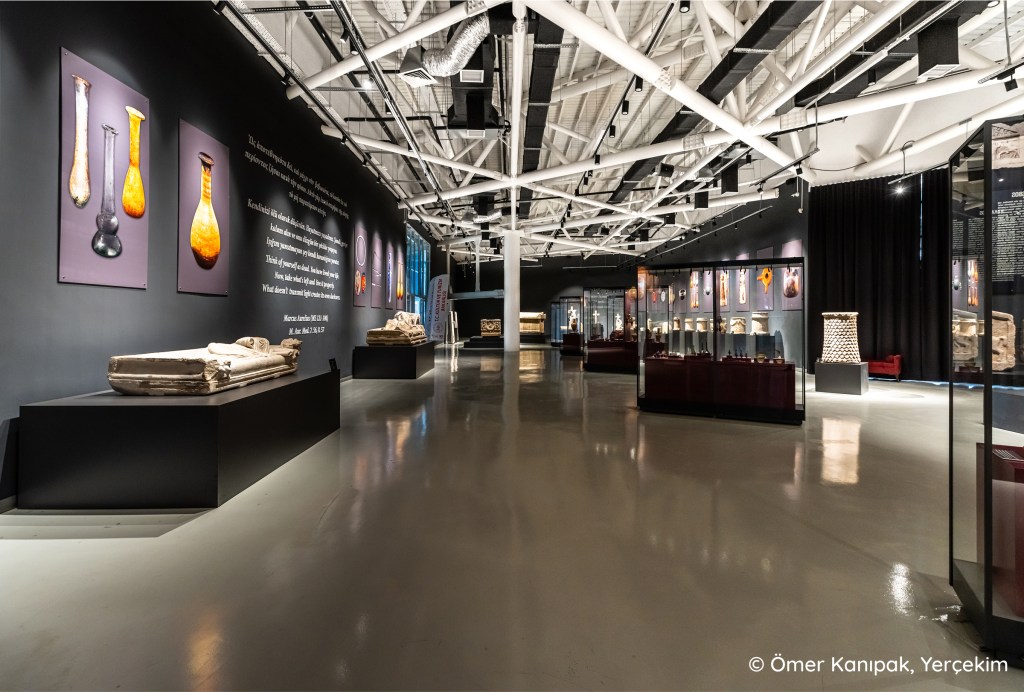



Project Name
Antalya Necropolis Museum
Project Location
Antalya
Project Office
Erkal Architects
Design Team
Emre Erkal, Ozan Erkal
Architectural Project Team
Bekir Aşçıoğlu, Cennet Aşçıoğlu, Atakan Palaşoğlu, Ogün Tuzcuoğlu, Murat Karaca, Teoman Gönenç
Employer
Antalya Metropolitan Municipality Republic of Turkey Ministry of Culture and Tourism
Main Contractor
ISSAN Construction Trade and Industry Ltd.
Static Project
ENDECO Engineering
Mechanical Project
Ünlü Engineering
Electricity Project
Promete Engineering
Infrastructure Project
Diyap Project
Project Start & End Year
2005-2016
Construction Start & Finish Year
2017-2023
Land Area [m²]
10500 m²
Total Construction Area [m²]
2000 m² Closed Construction Area
[5850 m² Roof Cover Area]