Anvit
Krupanshi JHA-PANCHAL | Co-Founder
highlights…
The discussions around land-use flexibility for new economic models stood out immensely for me.
It’s fascinating how projects that addressed adaptability in urban spaces while balancing functionality and cultural identity scored higher.
The emphasis on community impact and the technical brilliance in drawings and sections also made a difference. It wasn’t just about aesthetics, it was about how well these ideas could integrate sustainability into daily life, something highly relevant to Indian cities striving to balance modernity and tradition.
valuable ideas…
Two key takeaways stayed with me.
First, the approaches to achieving a path to zero carbon by leveraging both innovation and heritage practices were eye-opening.
It made me think about how India could adapt these strategies in our diverse climatic zones.
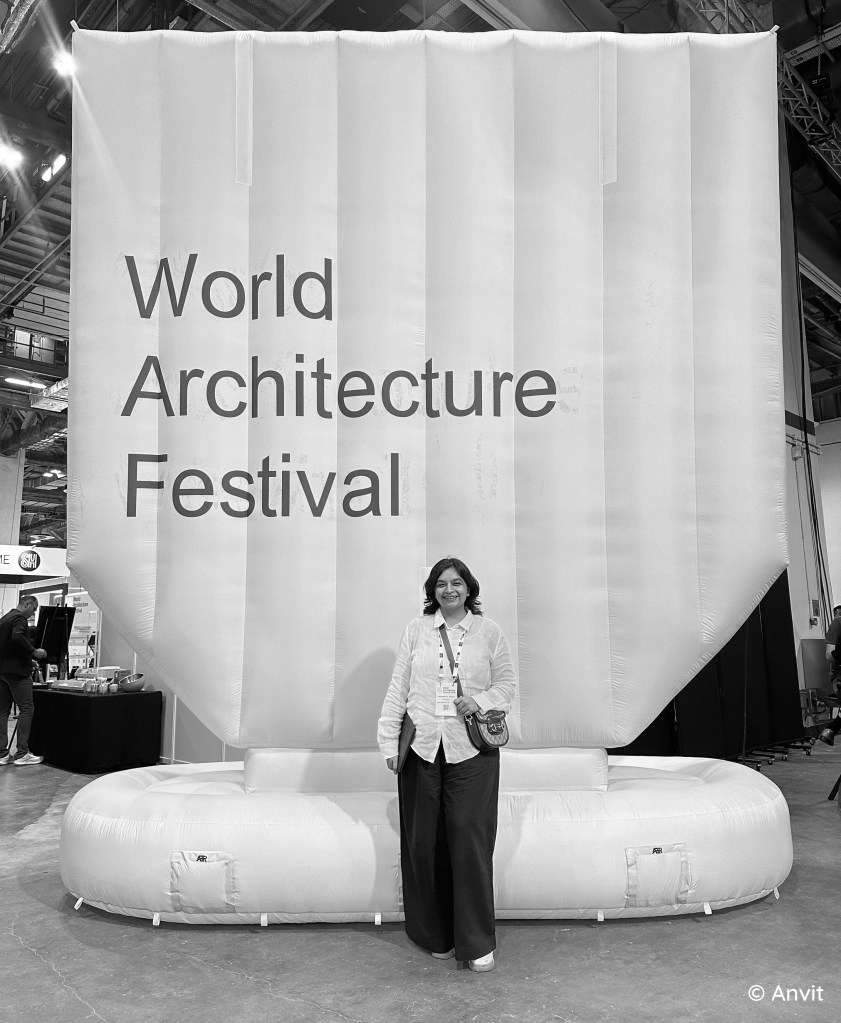
SSecond, the idea of inflated pods or dynamic spaces for design critiques inspired me.
Imagine Indian campuses using similar setups to make architectural education more interactive and design-oriented!
contributions to architecture…
WAF is a melting pot of ideas, it’s where legendary practices meet fresh talent, and that synergy sparks change.
For me, the event underscored how collaborative the future of architecture is becoming. It’s not just about individual creativity but about learning from diverse global perspectives.
This is especially valuable for Indian architects as we navigate challenges like rapid urbanization, climate change, and cultural preservation.
about WAF…
The WAF 2024 projects were incredibly diverse, ranging from large-scale masterplans to community-driven initiatives.
I was particularly impressed by how interactive the event was, with product companies showcasing innovations that directly support sustainable construction.
Singapore…
Singapore is an incredible venue, it exemplifies the blend of futuristic urban design and environmental harmony that many of us aspire to achieve.
suggestions…
Keep your presentation concise but impactful, and always ground your ideas in the principles of sustainability and community relevance.
For Indian participants, I’d recommend highlighting how your projects reflect the synergy of tradition and modernity. And finally, immerse yourself in the event, attend not just the jury sessions but also the student discussions and product showcases. They’re rich with inspiration and collaboration opportunities.