Completed Buildings | Culture
Seddülbahir Fortress
Highly Commended
Arzu Özsavaşcı Architecture Design Consultancy Company
Arzu Özsavaşcı | Founder
KOOP Architects
Y. Burak DOLU | Founder
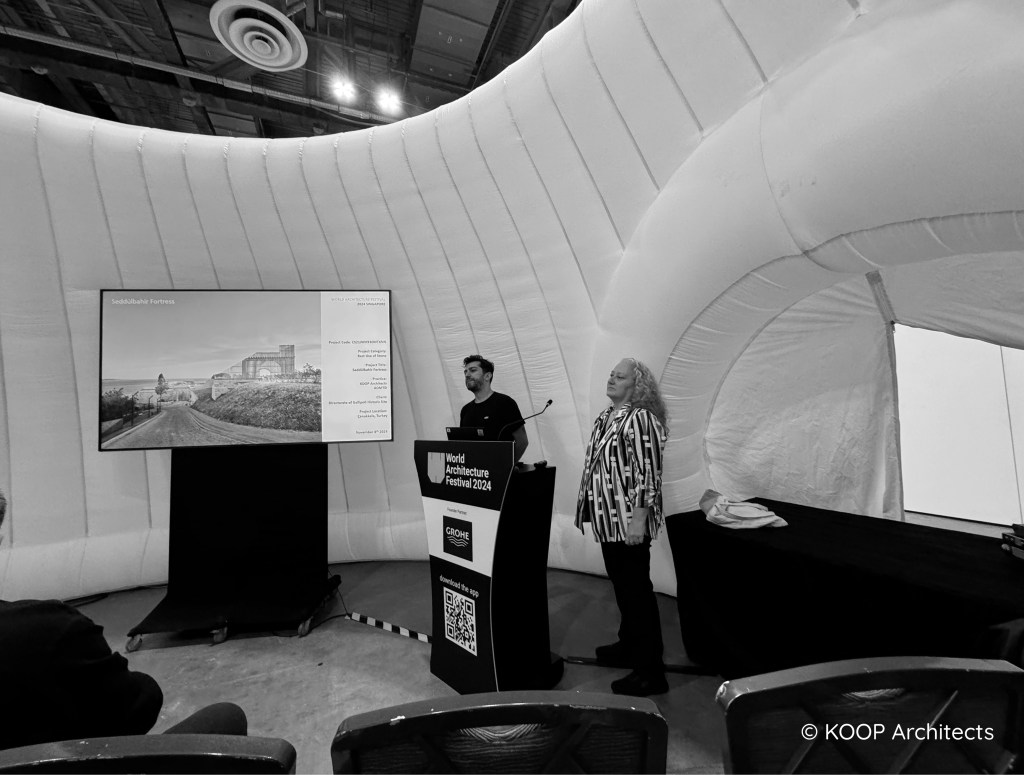
being a finalist & motivation…
Arzu ÖZSAVAŞCI
After the completion of the Seddülbahir Fortress implementation and its opening in 2023, we, as architectural authors, started to evaluate options such as news, publications and awards on various platforms in order to celebrate and increase the visibility of the efforts made for more than 25 years, the working teams and the final product of the building itself.
The finalist of Domus Restoration and Preservation Awards announced in March 2024 and the Chamber of Architects National Building-Preservation Award we received in April 2024 provided a strong motivation for all of us. In this way, we decided to tell about the process and the building at WAF and other platforms.
After deciding to participate in WAF Singapore 2024 with two architects, the process of budgeting for this very expensive event was challenging for us. We participated in WAF Singapore 2024 under the roof of our own companies to present this completed restoration work, which was carried out under a corporate umbrella.
Y. Burak DOLU
With the end of the implementation, we came together with the Scientific Advisory Board and the employer to discuss on which platforms and how we could present the results of the implementation. We decided to participate in scientific publications, general publications and award programs. We examined the awards given in the field of architecture and museology and created a list to apply. WAF was also on this list. We knew we were doing a good job as a team.
We received awards at various levels for all our applications, and the more awards we received, the more motivated we were to apply for new ones.
highlights…
Arzu ÖZSAVAŞCI
We attended the WAF event for the first time and made one of the first presentations at the event. In short presentations of 10-12 minutes, the narrative structure is very important, so we had to make a very strategic narration in order to explain the Seddülbahir Fort Restoration process, which is a very long-term project lasting a quarter century, in every aspect in a short time.
The main focal points of the presentation and the issues we emphasized were continuity, impermanence, the memory of the space, the team spirit, the memory of the team and the design and implementation process that prioritizes quality. As a result, these focus concepts attracted the attention of the jury, especially the questions were in this framework and they wanted to learn more details. We guess that they deemed Seddülbahir Fortress worthy of the Highly Commended award as a result of these evaluations.
Y. Burak DOLU
I think they were interested in the fact that the space and the project had a very deep story. They were most curious about how such a long-term and multidisciplinary process was carried out for a public building and how the team spirit was preserved.
Such efforts are not common in the world. It is a rare example of academia, public institutions and market stakeholders working together for so long.
preparation…
Arzu ÖZSAVAŞCI
All projects were presented in detail on the boards at the WAF Singapore 2024 event and on the event website.
After the presentation, especially the jury’s questions reveal the most striking way in which you can explain your project. Therefore, I remember thinking that maybe we could have used more striking video sequences in the presentation. In the final analysis, I think how much you believe in your project and your sincerity in the process of conveying the subject catches the jury.
As we endeavored to tell the story of a project that evolved over time with a team of hundreds of people and to share this experience, we were all very happy that this effort was crowned with an incentive award.
Y. Burak DOLU
I think it varies a lot depending on the project topic, category and jury. From some of the questions and the results, I think we were able to make our point to a large extent, but we still fell short.
It was very difficult to explain a project of more than 25 years in 10 minutes. In large and multi-layered projects like ours, it is necessary to give a very general narrative and make some striking points.
As in every competition, in the presentations here, it is more important how you present and what you explain than what the project is. In the evaluations limited to a 10-minute presentation, I think some jury members were manipulated.
remarkable projects & presentations…
Arzu ÖZSAVAŞCI
In the categories in which we were nominated, the Istanbul Museum of Painting and Sculpture designed by EAA, Antalya Necropolis Museum designed by Erkal Architecture, Art Center and Science Fiction Museum designed by Zaha Hadid, Village House designed by Studio mk27 and Sunita Shekhawat Flagship designed by Studio Lotus were the presentations I enjoyed. Apart from these categories, Persian Garden Studio – Kaarestan Event Space, fjcstudio – Darlington Public School, DS Landscape – Bayou Villas, line+ studio – Woven Passage to Cloudy Peaks, EAA – Yumuktepe Cover and Küçükçekmece Cemevi, Contexto – Tawa Refugio, Tezuka Architects – Fushi, mlkk studio – Melt Season Shenzen Installation and Kalyon Karapınar SPP Building designed by Bilgin Architecture were the standouts among hundreds of presentations.
Y. Burak DOLU
Studio Lotus’ Sunita Shekhawat Flagship Store and Gallery project in the Best Use of Stone category was very interesting. I can’t say that I liked the architecture, but it was interesting to see the project and implementation processes of such a work in India.
The projects from China and other Asian countries attracted my attention the most. You can see both very similar and very different approaches to the western-centered architecture we are used to.
about WAF…
Arzu ÖZSAVAŞCI
It was a unique experience to witness the intense and flawless execution of the WAF organizations prepared by an experienced team for years, from the preparation process to the gala dinner, to meet architects from all over the world, to ask questions about their designs face to face and to share experiences.
As I mentioned before, as participants from Turkey, we were attracted by the high participation fees, but apart from this detail, we did not encounter any problems during the event. The total venue, presentation areas, exhibition stands, main stages and social areas were well organized.
There were projects of many different scales, from small to city scale, and participants at many levels, from small companies to large corporations. I think the presentations were dominated by the effects of the global climate crisis, procurement and material use, and local-rural prioritization.
Singapore…
Singapore has always been inspiring for architects and planners due to its economy and sociocultural structure that sustain its high level of prosperity. 15 years ago, I came back to Singapore for the WAF event, which I found fascinating, and it was surprising and pleasing to be awarded the Highly Commended award for this project under the Marina Bay Sands roof, which I observed the construction process at that time.
Y. Burak DOLU
WAF is one of the most comprehensive and face-to-face competitions in the world. This year 775 projects made it to the finals.
It is very impressive that at least 1500 people from the project teams participated in the event, that it offers the opportunity to listen to such a selection of architects one-on-one, and to meet architects from all over the world. On the other hand, it is tiring to be exposed to so much content in a few days.
It is impossible to listen and try to understand so many projects and offices. I had the chance to watch very few of them. The fact that they support such a wide participation and open dozens of categories is of course for commercial reasons. I think the commercial aspect of the event suppresses the intellectual aspect.
Singapore…
Singapore surprised me a lot with its architectural background. I think I am ignorant about many parts of the world, especially the non-European-American world. It has a great diversity with its historic neighborhoods, modernist buildings, probably built in the 70s, reminiscent of Soviet blocks, and then contemporary skyscrapers. Whereas skyscrapers and high-rise developments in many places are car-centered and oppressive, in Singapore I saw a very human approach. Ground floors are set back, sheltered arcades and passages are built, public spaces are created on the plinth, and gardens are created with slits on the upper floors. A bad building typology has been humanized in good hands.
WAF 2025 & Miami…
Arzu ÖZSAVAŞCI
I think America can offer a brand new vision for WAF, especially at a time when the climate crisis is changing and transforming building production and urban morphology, this event in America, one of the biggest actors in the building sector, will be important.
Y. Burak DOLU
Opening WAF in the US will provide an opportunity to expand the global reach of the event and build stronger ties with the architectural community in the Americas. I am more curious about the participation from South America than from North America.
South American countries, which have been far away from WAF until now, will participate more intensively in Miami and I am sure we will see interesting works
development & progress of WAF…
Arzu ÖZSAVAŞCI
We are talking about a worldwide organization that has completed 16 years, especially with Paul Finch’s personal dedication and superior perseverance, bringing together actors in the construction sector from all over the world, and I think it is an important example that unites the whole sector.
I hope it will continue for years in an institutional structure as well as personal efforts, there is a need for such organizations. Being cheaper in relation to the location and allowing everyone from students to employees to participate are important criteria, I look forward to the next destinations.
Y. Burak DOLU
It was probably held in Singapore for a couple of times. Having a globe-trotting event again will make it stronger.
I think the categories and finalist projects should be reduced, maybe the number of days of the event should be increased and the participation should be cheapened. Only in this way I think they can be more inclusive and avoid being superficial.
Completed Buildings | Culture
Seddülbahir Fortress
Highly Commended
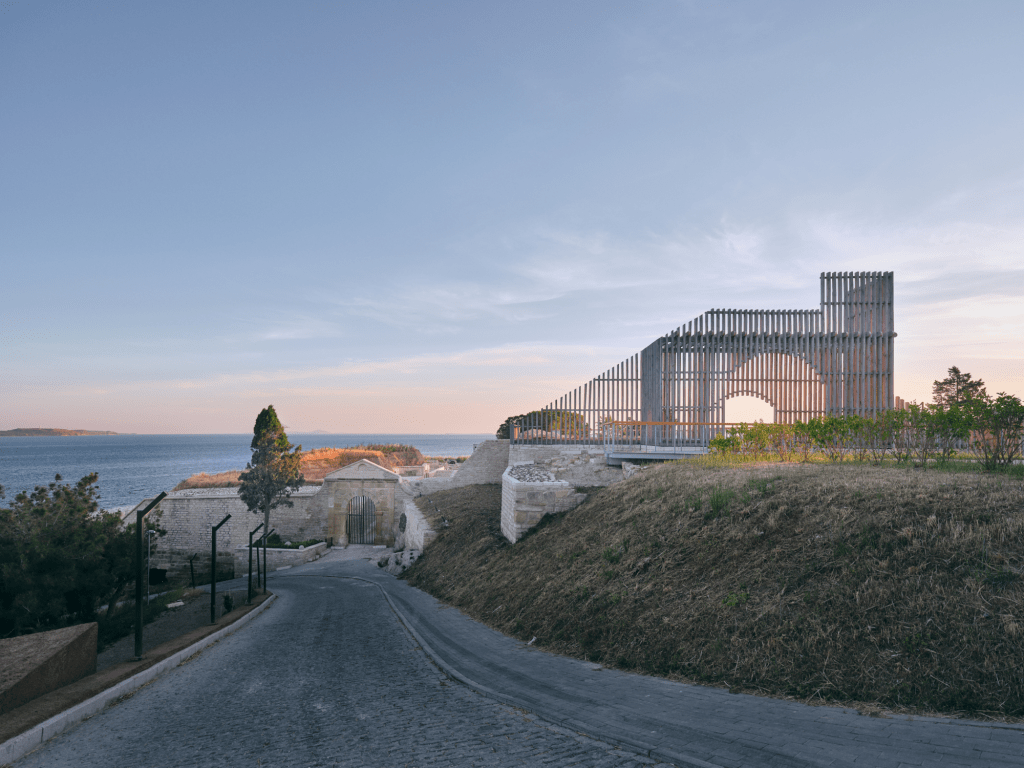 After 25 years of many intensive phases of project preparation and application, Seddülbahir Fortress was opened to visitors after the completion of the restoration work on March 18, 2023. The comprehensive academic research and documentation which was initiated in 1997 with the collaboration of Koç University and Istanbul Technical University in Seddülbahir Fortress, evolved into a detailed documentation project to support the conservation-restoration-reusage projects between 2005 and 2009. The projects were approved by the Çanakkale Regional Council for the Conservation of Cultural Properties at the end of 2009. The restoration and museum reusage applications, which were tendered by ÇATAB [Çanakkale Wars and Gallipoli Historical Area Directorate] in 2015 were completed in 2023.
The initial construction of the Seddülbahir fortress, or the “Wall of the Sea”, began in 1656 as a result of the patronage of Sultan Mehmet IV.’s mother, Hatice Turhan Sultan. Hatice Turhan Sultan is a rare example in Ottoman history of the patronage of military architecture by a royal Ottoman woman. According to different archival records the fortress was first built by a team working under the direction of the Ottoman court architect Mustafa Ağa. The fortress suffered great damage during the Battles of Çanakkale during World War I.
Seddülbahir Fortress was the first project selected by the Site Directorate ÇATAB on the Gallipoli peninsula, and the tender for its restoration was completed in 2015; shortly thereafter the restoration application process began. During the implementation process, the project team and consultants who worked in the field between 1997 and 2009 joined the team to form the Scientific Advisory Board and to ensure continuity. All the application details were discussed in more than 100 meetings in which members of the Scientific Advisory Board, the control organization, and experts from different disciplines participated. The fundamental approach to the fortress was to preserve as many of the elements of the structure as possible; interventions were made only when there was a structural necessity, a need for visitor safety, or situations that disrupted the architectural integrity of the fortress.
Since the start of the implementation phase in 2015, all aspects of the process have been presented in several publications, conferences, and other types of communications; information about the application process was also shared regularly with experts and members of the local community. The team expanded from 1997 to 2023 and included the devoted efforts of hundreds of people who continued to work with the excitement and enthusiasm that characterized the very first season of field work. Improvements continue to be made in all facets of the architectural project according to the feedback received from visitors after the opening. Work on the fortress in on going and includes the creation of creative scenarios for the use of the fortress, the production of academic publications, and other types of documentation projects.
Collective Process and Unique Conservation Approaches
Following the withdrawal of military forces from Seddülbahir Fortress in 1997, Prof. Dr. Lucienne Thys-Şenocak from Koç University, Department of Archaeology and the History of Art and Prof. Dr. Rahmi Nurhan Çelik from ITU Geomatics Engineering Department started a joint research project, initially at Seddülbahir Fortress and then at Kumkale. The interdisciplinary research team, together with many academic experts, undergraduate, and graduate students from these universities carried out historical and architectural research. With the ITU Geomatics Engineering Department a general survey was undertaken during this phase of project at both the Seddülbahir and Kumkale Fortresses from 1997 to 2004.
The project for the restoration of the Seddülbahir Fortress restoration officially started with the protocol signed between the Ministry of Forestry and the Vehbi Koç Foundation in 2005; this phase of the project was completed with the approval of the Çanakkale Council for the Conservation of Cultural Properties at the end of 2009. The preparation of the restoration project that was carried out during the period of collaboration between Koç University and Istanbul Technical University, included a comprehensive field survey using 3D laser scanning technology that was very new at that time in Türkiye. The data from the survey was then processed in the project office at the ITU Geomatics Engineering Department Lab. During this phase of the project, art and architectural history research continued and archaeological excavations at Seddülbahir were carried out jointly with the Çanakkale Archaeology Museum. Material analyses and oral history studies were carried out as well. Restitution and restoration projects were completed based on the research and the results of the field work. The results of the project, which included, at that time, the first major 3D laser scanning and documentation of a historical structure in Türkiye, were presented in several international symposiums as well as other academic platforms. The diverse research became the subject of many MA and PhD theses, academic articles, book chapters, and university lessons.
The Gallipoli Peninsula had the status of a National Park between 1973-2014 and was under the responsibility of the General Directorate of National Parks of the Ministry of Forestry. With the establishment of the Çanakkale Wars Gallipoli Historical Area Directorate [ÇATAB] in 2014, the peninsula was given the status of a “Historical Area”. During this period of administrative changes, the research team working at Seddülbahir Fortress continued to communicate with different government institutions to ensure that the labor and efforts of the team would be taken into account and provide continuity in any future conservation, restoration and reusage projects.

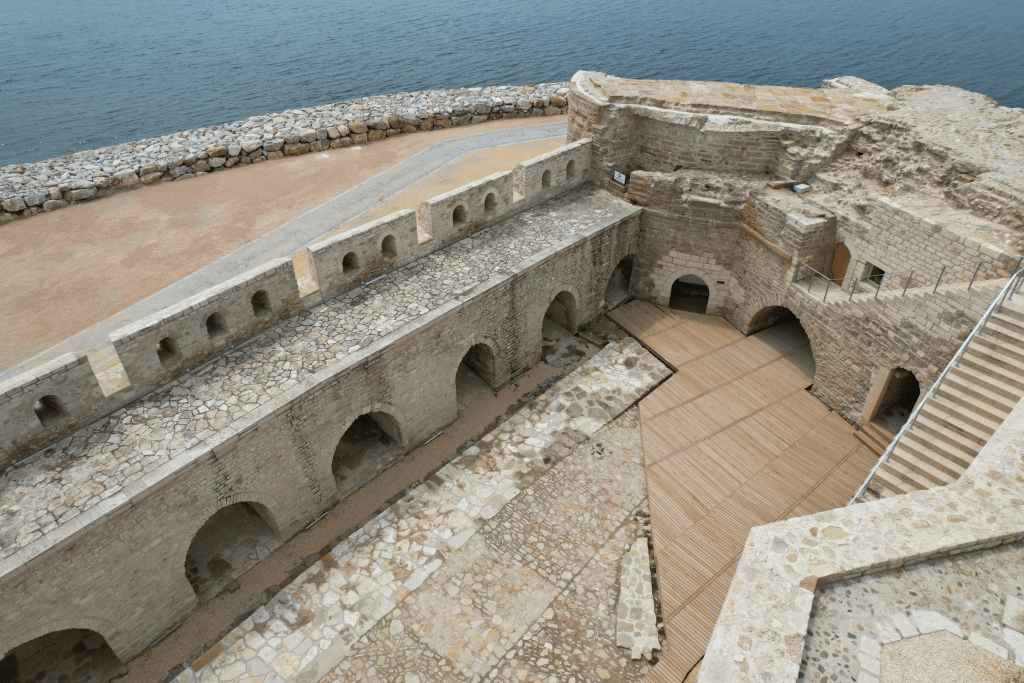
 For the conservation and restoration of Seddülbahir fortress, several different decisions have been made about how to document, preserve, restore and/or reconstruct different parts of the structure and site. The need to preserve evidence of past destruction that occurred during the Çanakkale Wars [i.e. the West and South towers] was recognized as a crucial aspect of the interpretation of the site as these two towers, preserved as ruins, help to commemorate the battles fought at Seddülbahir and serve as evidence of the destruction that occurred during these wars. The decision to conduct limited reconstruction in some parts of the fortress [i.e. West wall crenellations] and to advocate again any reconstruction [i.e. the late 19th century Ottoman military barracks] were also decisions informed by recent debates in critical heritage studies concerning authenticity, theories about architecture and memory, the commemoration of the built heritage of war, as well as other interpretive needs. Since the beginning of the project in 1997, and during the restoration phase that began in 2015 the progress of the project has been shared openly and regularly with members of the local community at Seddülbahir along with other stakeholders, through publications, site visits and other activities.

Criteria for the Application and Implementation Process
With the start of the restoration application in June 2015, cleaning the site was a priority at the Seddülbahir Fortress as it had been covered by vegetation for many years. The reinforced concrete structures and walls from the 1960s that had been built for military purposes were removed at this stage. As a result of comprehensive archaeological excavations, ruins from different periods of the fortress were discovered or further articulated. The late 19th century barracks in the upper fortress, the Bab-ı Kebir [Main Gate], the Southwest Tower, which was known to exist from archival records, but was buried and not visible, the foundations of the Southwest wall, and several other remains of structures within the fortress were discovered. With the building remains and substructures excavated, the original plan of the fortress has now become more understandable and more data has been obtained about the changes the fortress has experienced from the 17th through the 21st centuries. As a result of archaeological research and excavations, more than forty thousand archaeological finds were unearthed and important information regarding the late Ottoman period and World War One archaeology was collected.
Updating the survey drawings that had been prepared between 2004 and 2009 was the priority of the work carried out during the later implementation phases of the project. New survey works were conducted and prepared which incorporated the information about the structures that had been discovered during the archaeological excavations, and application decisions were updated accordingly. Adhering to project decisions approved by the Çanakkale Regional Council for the Conservation of Cultural Properties, different eras of the history of the fortress were articulated in the restitution drawings. Also, with the help of one of the oldest archival records for the fortress, a detailed drawing of Seddülbahir signed by the French cartographer Berquin in 1700, the restitution project was able to present a more accurate scenario of the earliest phase of the fortress and its environs. Detailed studies of the restoration projects were updated and examined by the members of the Directorate control team, the scientific advisory board, and the technical staff working at the site. The survey work and all projects were submitted to the Council and the implementation of these decisions then started. At the completion of the restoration work, the as-built project of the site was prepared concurrently.
During the restoration, new information and new data on construction techniques and different building periods of the fortress emerged. One of the important discoveries was made about the Northwest Wall. After cleaning the soil and rubble on the upper level of that wall, traces of the crenellations from the first period of the building in the 17th century were found embedded in the later 19th century wall, the height of which had been raised and another set of crenellations added. This is evident in the photographs taken of this section of the fortress before the destruction of World War One. After detailed on-site findings and analyses of archival documents, dendrochronology research was also undertaken of this section of the wall. Then proposals for, intervention were made which presented both periods of crenellations. The foundations of the earlier crenellations were preserved, and some sections partially completed to indicate the original dimensions of these. A partial reconstruction of a few of the later crenellations was undertaken only to show the relationship between the two distinct periods of the long Northwest wall. All this helped to demonstrate a fundamental principle in restoration: how important it is to carefully research, preserve, and to present all the different eras of building’s past. A large gap in the same wall that had been partially opened during the war and then further dismantled for the construction needs of the village in the early 20th century was reconstructed so as to insure the physical and aesthetic integrity of that section of the fortress.
During the archaeological excavations carried out at the entrance of the fortress, the architectural remains of the Bab-ı Kebir, [Main Gate], which was heavily damaged during World War I and did not survive to the present day, were discovered. It was decided to preserve the ruins of the Bab-ı Kebir, to articulate the entrance axis to this structure and to design a modern addition to mark its original place. On the southwest slope of the fortress, the architectural remains of the Southwest Tower, whose existence was known from engravings and other archival records, but which was buried under rubble before World War One, was unearthed during the removal of rubble and archaeological excavations. Conservation decisions were also made about the foundations of the main late 19th century Barracks in the upper fortress and the Southwest Wall, and different sections of various walls were strengthened and preserved in their current state.
The West and South towers of the fortress had been heavily damaged in the Çanakkale Wars and were stabilized before the restoration because they posed a danger of collapsing. The restoration application was completed by making structural improvements and the remains of the domes of each of these towers were supported with buttressing so as to prevent further damage to the original building fabric. The decision not to reconstruct the West and South Towers of the fortress was an intentional desire to preserve the memory of destruction that the fortress of Seddülbahir experienced during the violent attacks to the fortress perpetrated by the Allied Forces during the Çanakkale Wars.
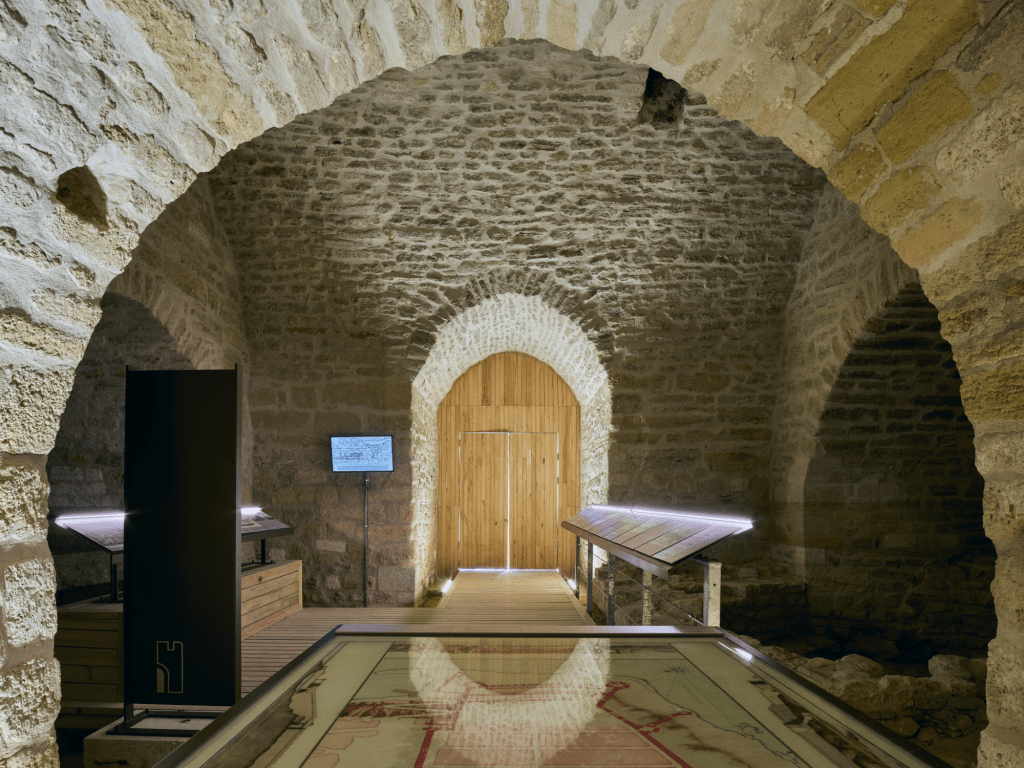
The aforementioned drawing by Berquin from 1700 also shaped the restoration process as it showed the location of the original coastline from the late 17th and early 18th centuries which has now receded to a dramatic extent. The drawing also revealed many of the structures within the fortress and adjacent village at that time. The jetty that was constructed during the restoration process followed the evidence from in the Berquin drawing and was reconstructed so as to save the lower South tower and its abutting walls from continued erosion and other damaging weather events. An underwater archaeological survey was conducted along the shoreline where the jetty was constructed and all evidence of earlier jetties of the shore was recorded. Several cannon balls were also excavated during this underwater archaeological survey and became part of the archaeological collection at Seddülbahir.
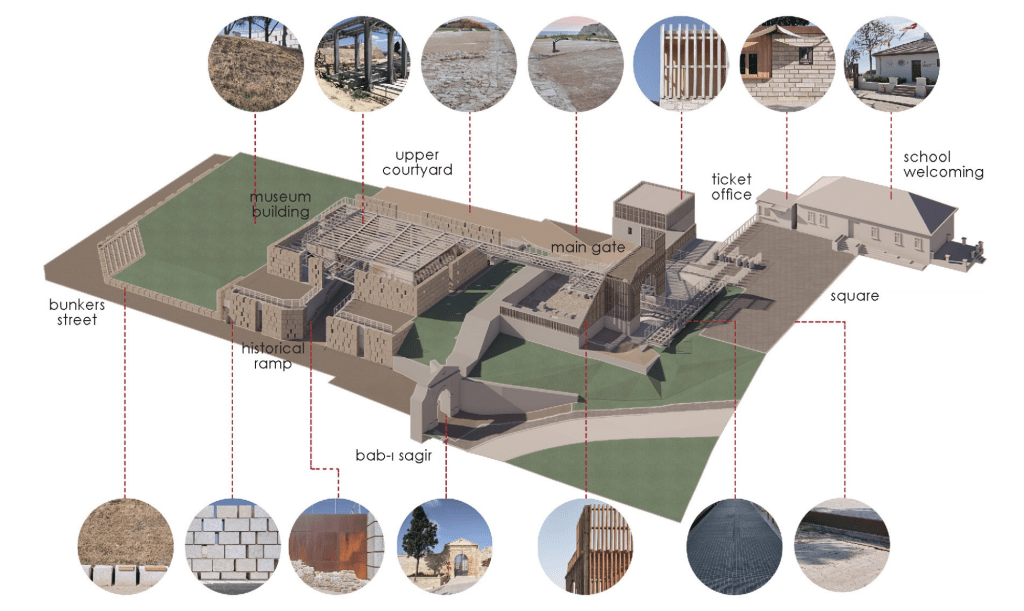
The Re-use project is one of the most important aspects of the project, and the team to undertake this task was selected as a result of an invited competition in 2017. Among the intentions for reusage was the creation of an entrance to the fortress which recalled in some way the destroyed Main Gate, and the creation of a new museum building within the fortress. In addition to these goals, the square in front of the fortress was redesigned, the primary school in the square was renovated and converted into a visitors’ center and center for local crafts production. New functions were given to many of the spaces within the fortress, and landscaping was undertaken for the entire site and its environs. Planning for visitors with disabilities was also undertaken at this time and walking paths and accessible spaces and routes through the sites were created.
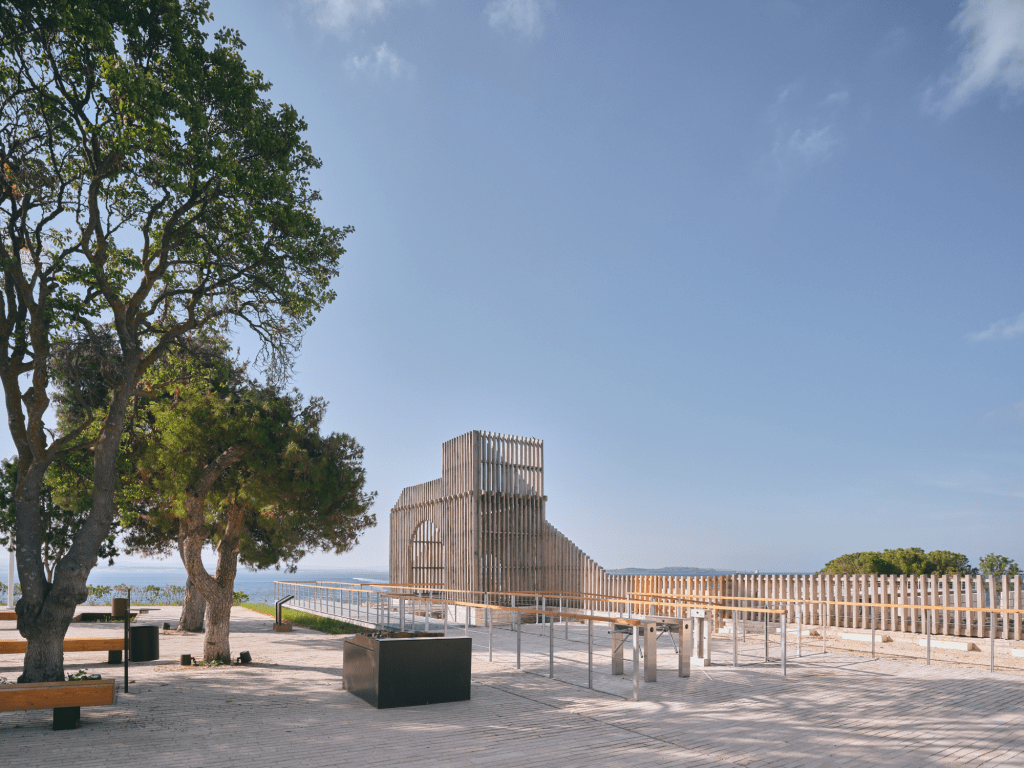
Instead of a heavy-handed restoration approach to the entrance of the fortress which would use more permanent types of materials such as stone or brick, a proposal for the Main Gate was made which suggests an outline of what these sections of the fortress, particularly the Main Gate and the Domed Building at the entrance, may have looked like originally. If a reconstruction of these elements had been done many of the existing remains in the entrance area would have been destroyed or become largely invisible under a new layer of construction. Further, since we are not sure about the exact plan for this section of the fortress, there would be a large possibility of making irreversible mistakes in the interpretation of several architectural details. Instead, a decision was made to create a lightweight contemporary perforated wooden structure which would provide both an outline of the Main Gate, and the wall that leads from that gate to the little harbor below. Now the Main Gate resonates as a silhouetted slated frame showing in a less permanent and lighter wood construction only the basic features of the Main Gate.

 As a result of extensive research examining the fortress in different periods, the decisions about the height and shape of the new gate were made. In order to show the general form of the Bab-ı Kebir, a light wooden structure was proposed which would contrast with the stone walls of the fortress but does not jar, or seem out of place. This language of design, in which wooden elements are used, was also employed for the now missing crenellations on the East Tower and the roof of the Domed Building.
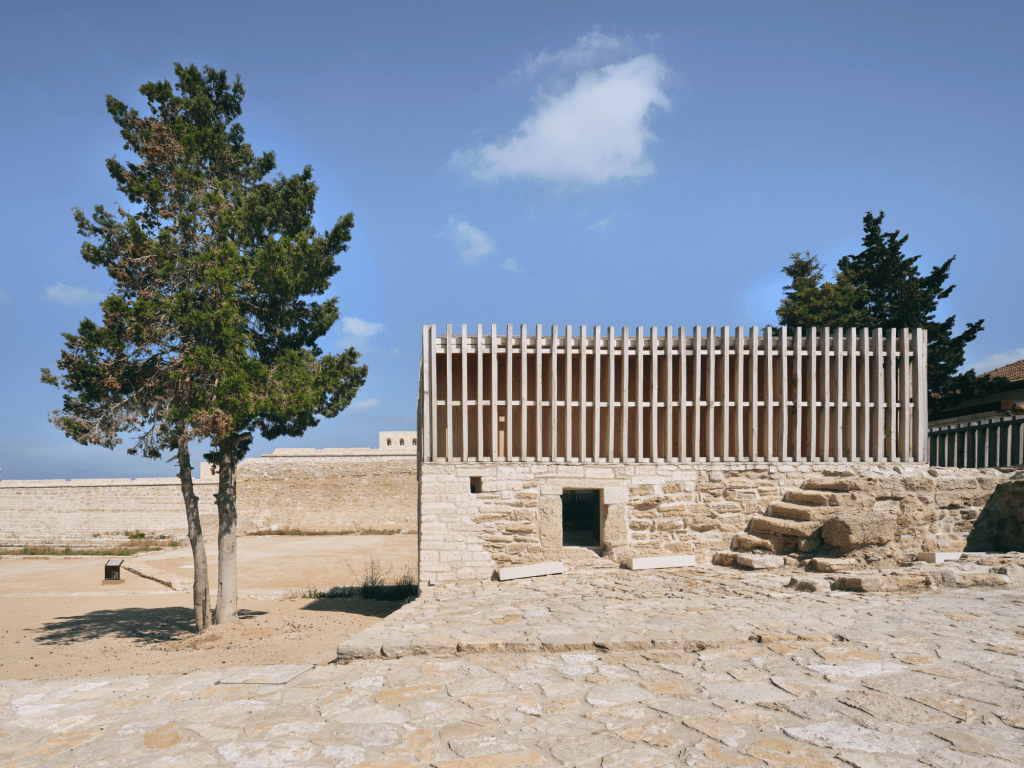
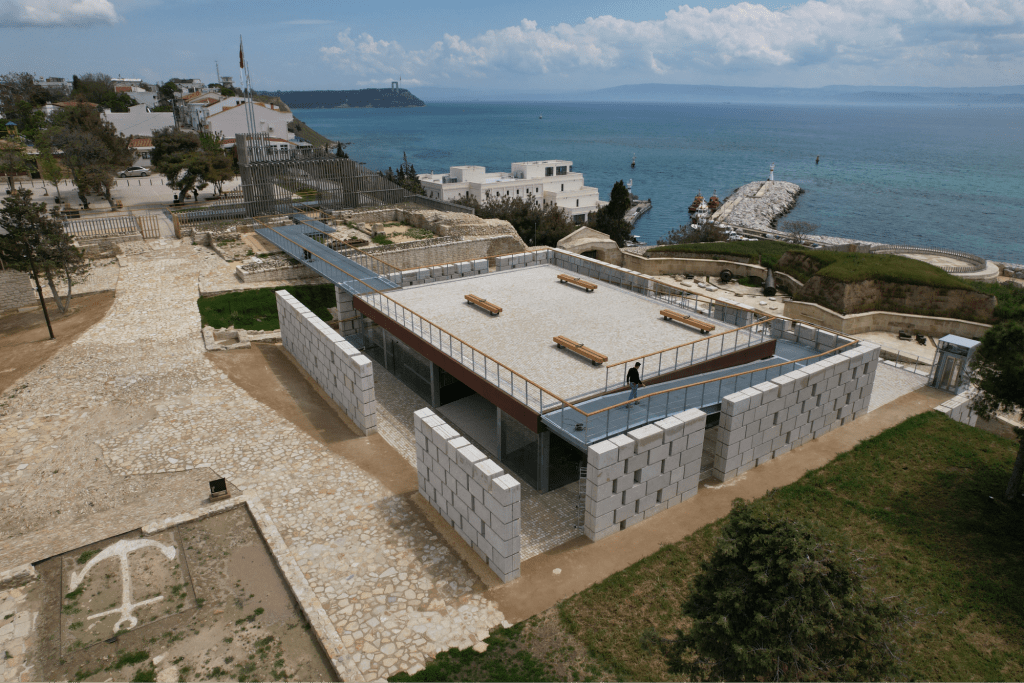
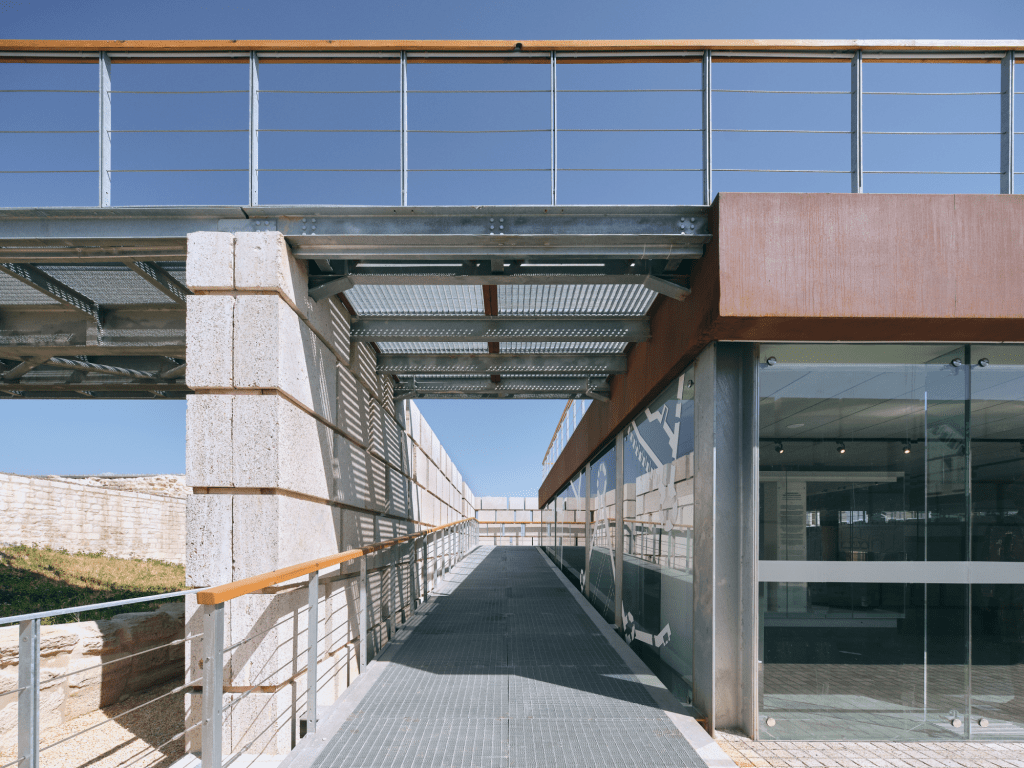
A new building was designed for the museum in order to facilitate access to the fortress and its upper courtyard, to exhibit the archaeological finds from the site in appropriate conditions, and to provide places for service areas such as toilets, an infirmary, and other technical needs which would not damage the fabric of the historical buildings. The walking path in the upper part of the fortress came to light as a result of the excavations and helped to determine the form and the circulation patterns intended for the new building.
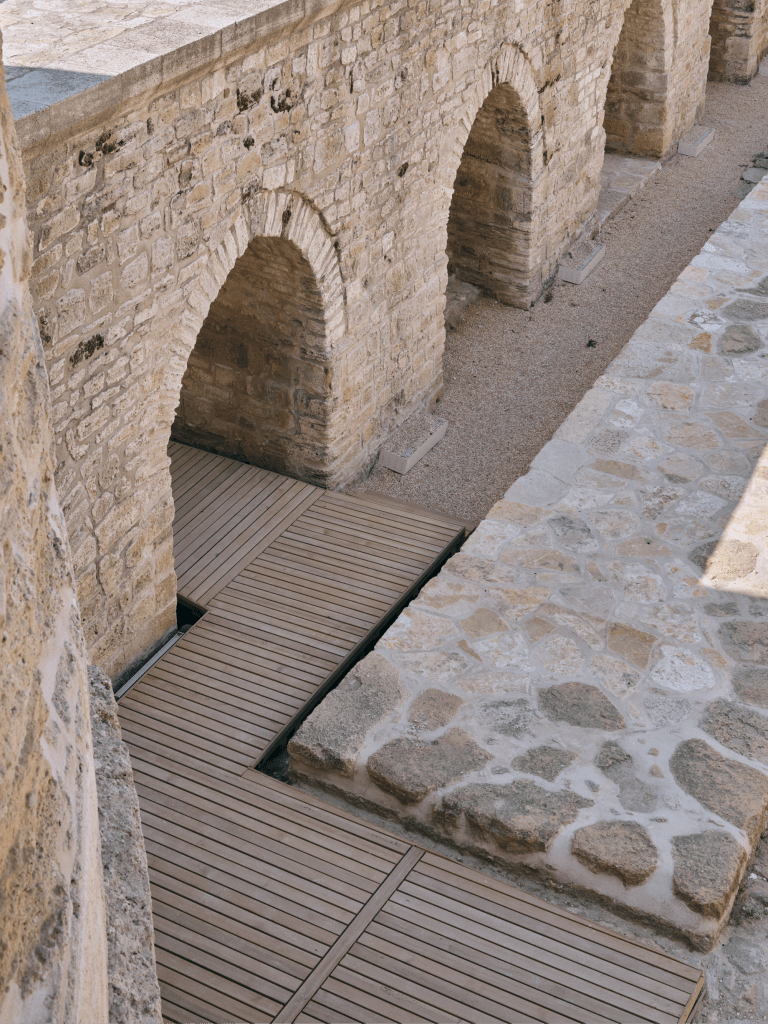
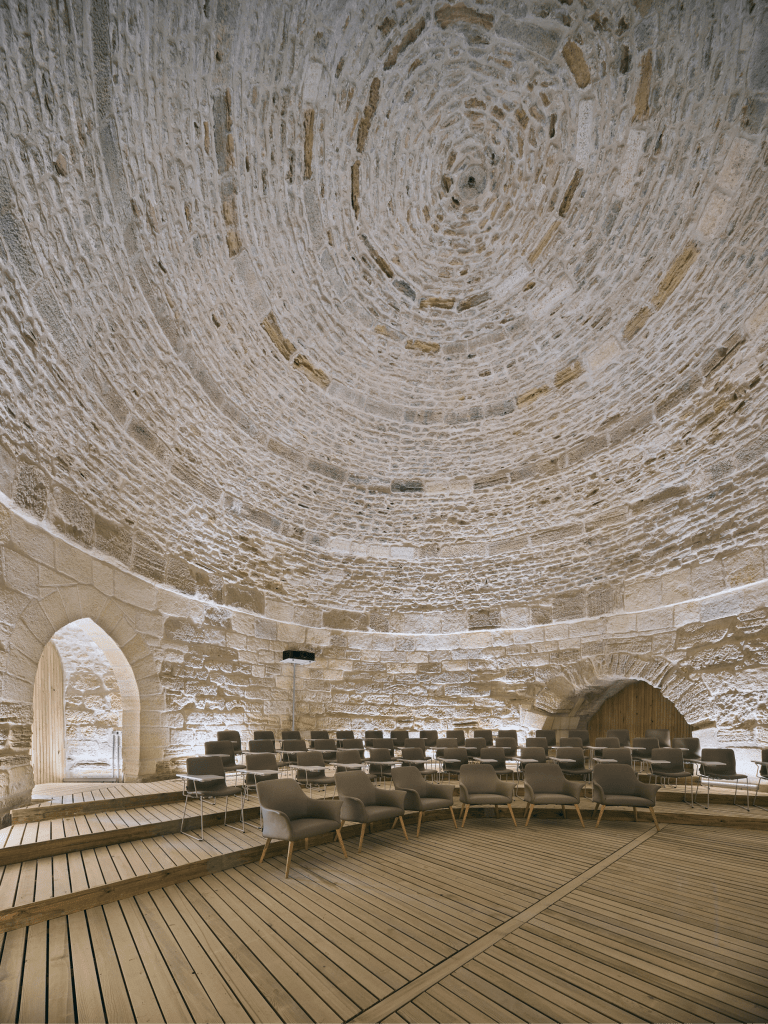
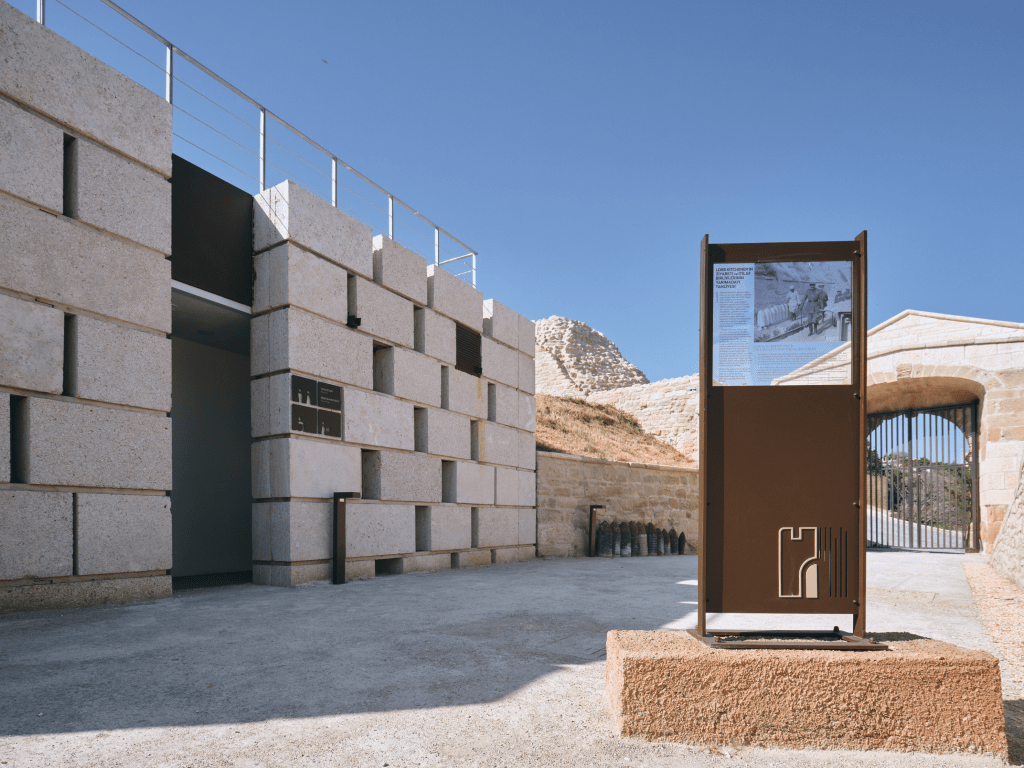
The outer shell of the new building was formed with large blocks of the same type of stone used in the construction of the fortress, and due to the resemblance of material the visible impact of the museum building is reduced. The wooden beam support system used in the original Ottoman walls of the fortress were a source of inspiration for the museum building. The walls of the historical ramp that divides the museum building were preserved, and the traces of the sections that have been lost were marked with Corten steel surfaces. 

To date the restoration and design work at Seddülbahir Fortress has received both national and international awards and recognition including the National Architecture Awards Building/Preservation Category Winner, International DOMUS Award Restoration and Preservation Finalist, Architizer A+ Awards Cultural/Museum Finalist, World Architecture Festival Completed Buildings/Culture finalist and Highly Commended Award Winner, finally Heritage Project of the Year in Dezeen Awards 2024.
Today Seddülbahir Fortress is a vibrant place. The architecture invites all to reflect upon the history of past destruction and war, and to cherish peace. With its unique entrance complex, museum, an artists’ workshop, and redesigned village square, all serving visitors and the local community, the fortress welcomes the visitors with a prospect in which war is now a distant, but important memory.
Project Dates
2015-2023 Restoration Construction, Restoration and Re-Use Projects [ÇATAB]
1997-2004 Research and Documentation Project [Koç University – Istanbul Technical University]
2004-2009 Surveying, Restitution and Conservation Projects [Koç University – Istanbul Technical University]
Land Ownership
General Directorate for Foundations
Client
2015-2023 Directorate of Gallipoli Historic Site [ÇATAB]
2004-2009 Ministry of Environment and Forestry – Directorate of Nature Conservation and National Parks
Project Institutions | Sponsorships
2015-2023 ÇATAB [Directorate of Gallipoli Historic Site]
2004-2009 Koç University & Istanbul Technical University | Koç Foundation
Project Authors
Restoration Project Author | Arzu Özsavaşcı [Architect, M. A., AOMTD]
Re-Use Project Author | Y. Burak Dolu [Architect, M. Arch, KOOP Architects]
Scientific Advisory Board
Dr. Gülsün Tanyeli [Istanbul Technical University Faculty of Architecture, Department of Restoration]
Prof. Dr. Lucienne Thys-Şenocak [Koç University Department of Archeology And Art History]
Prof. Dr. Rahmi Nurhan Çelik [Istanbul Technical University Faculty of Civil Engineering Department of Geomatic Engineering]
Assoc. Prof. Dr. Haluk Sesigür [Istanbul Technical University Faculty of Architecture, Department of Structural Statics]
Arzu Özsavaşcı [Architect, M. A., AOMTD]
ÇATAB [Directorate of Gallipoli Historic Site] Team
Gökhan Gümüşdağ [Restoration Group Leader, Art Historian]
Aslıhan Kervan [Historian]
Aydın Karabıyık [Electrical Engineer]
Aykan Özel [Restorer]
Emin Murat Özdemir [Restorer]
Marziye Eşki [Geomatic Engineer]
Mehmet Akif Erdoğan [Geomatic Engineer]
Mert Çatalbaş [Archaeologist]
Mustafa Kafkas Dereli [Architect]
Özge Alpaydın [Mechanical Engineer]
Özlem Coşkun [Landscape Architect]
Serpil Savaş [Art Historian]
Tolga Kaan Çakmak [Civil Engineer]
Ümit Yılmaz [Construction Technician]
Main Contractor
ABMA Construction Restoration
Sub-Contractors
ASMAZ Wood Frame Structures
Şanlıbayrak Steel
Met Construction
Fibula Architecture
Karınca Advertising
Temay Landscape
ERD Marine
Sıraç Electrics
EF Air Conditioning
Atempo
Site Managers
Rabia Şengün
Merve Çankaya
Özge Mutlu
Vezir Hezer
Construction Site Team [ABMA Restoration]
Maksut Refik Dönmezler [Civil Engineer, Restoration Specialist]
Abdülmenaf Yakiş [Restorer]
Ahmet Ağar [Art Historian]
Bekir Can İzmir [Architect]
Burhan Kutucu [Architect]
Ebru Koçak [Architect]
Enes
Demirel [Civil Engineer]
Erdal Aslan [Civil Engineer, M.Sc]
Erdal Civelek [Architect]
Ergin Or [Archaeologist]
Erol Bulut [Archaeologist]
Erol Usman [Restorer]
Esra Tunçer [Construction Technician]
Fadim Koçak [Archaeologist]
Gizemnur Bağ [Architect]
Hakan Demirarslan [Archaeologist]
Hakan Öğütçü [Geomatic Engineer]
M. Emin Alpaydın [Geomatic Engineer]
Mehmet Fatih Okan [Civil Engineer]
Merve Çankaya [Architect]
Nazım Soylu [Archaeologist]
Ömer Can Kara [Restorator]
Özge Mutlu [Civil Engineer, M.Sc]
Rabia Şengün [Civil Engineer, M.Sc, Restoration Specialist]
Seda Yalçınkaya [Architect]
Serkan Eloğlu [Archaeologist]
Vezir Hezer [Master Mason]
Yasin Tosun [Topographical Engineer Msc]
Zeki Şahbaz [Archaeologist]
Zuhal Güler [Art Historian]
Re-Use Concept Project Team [KOOP Architects & Museum Exhibition Works]
Y. Burak Dolu [Architect, M.Arch., Restoration Specialist, KOOP Architects]
Seçkin Maden [Architect]
Evrim Deniz Koç Çeliker [Historian, Museum Exhibition Works]
Yeşim Kartaler [Museologist, Museum Exhibition Works]
Cihan Çolak [Archaeologist, Museum Exhibition Works]
Barancan Dağıstan
Derya Koç
Enes Pilavcı
Re-Use Application Architectural Project Team [KOOP Architects & Museum Exhibition Works]
Y. Burak Dolu [Architect, M.Arch., Restoration Specialist, KOOP Architects]
Alexandra Koumpouli
Alper Karasu
Birsen Parlar Erkan [Architect, Museum Exhibition Works]
Dilara Öztürk [Architect, Museum Exhibition Works]
Elif Tuğba Gürkan [Architect, Koop Architects]
Ezgi Bekarslan
Gamze Yeşildağ [Architect, Koop Architects]
Hazal Alıcıgüzel
Işıl Karabulut
Koray Bayraktutan [Architect, Koop Architects]
Nurseray Sarıçayır [Architect, Museum Exhibition Works]
Saleh Malek
Selin Şentürk
Interior & Exhibition Design [Koop Architects & Protection Academy]
Rabia Şengün [Civil Engineer, M.Sc, Restoration Specialist]
Tuğba Ağcabay [Architect, Abma Restoration]
Y. Burak Dolu [Architect, M.Arch., Restoration Specialist, KOOP Architects]
Aykun Haddeler [Graphic Designer]
Betül Tuğçe İzgi [Architect, Abma Restoration]
Elif Tuğba Gürkan [Architect, Koop Architects]
Gamze Yeşildağ [Architect, Koop Architects]
Hakan Öğütçü [Geomatic Engineer]
Koray Bayraktutan [Architect, Koop Architects]
Kübra Keskin [Architect, Abma Restoration]
Sezen Cezan [Graphic Designer]
Nihan Demiral [Graphic Designer]
Yasin Tosun [Geomatic Engineer]
Selim Ekşi [Küp Production]
Landscape Design [caps.office]
Mehmet Cemil Aktaş [Landscape Architect, caps.office]
Pınar Kesim Aktaş [Landscape Architect, caps.office]
Gülşen Ayla Olgun
Şeyma Kahraman
Lighting Design [Lightapp]
Ali Ülgen [Electrical Engineer, Lightapp]
Zeycan Abay
Structural Project [Arke Engineering & Architecture]
Murat Alaboz [Civil Engineer, Restoration Specialist]
Mechanical Project [KDP Engineering & MNM Can Engineering]
Mahmut Kaya [KDP Engineering]
Melih Sayı [MNM Can Engineering]
Electrical Project [KDP Engineering & Nira Architecture Engineering]
Selçuk Özdoğan [KDP Engineering]
Handan Gürler Akçay [Nira Architecture Engineering]
Infrastructure Project
Süheyla Kuru [Environmental Engineer]
Model
Barış Taş [Küçük Atölye]
Photography
Egemen Karakaya
KOOP Architects
ABMA Construction Restoration
Gökhan Tarkan Karaman Media-Production
Project Teams
Video Production
Saleh Malek
Koray Bayraktutan
Y. Burak Dolu
Consultants
Ahmet Tanyolaç [Architect]
Ömer Arslan [Historian]
Ali Osman Avşar [Sculptor]
Murat Alaboz [Civil Engineer, M.Sc, Restoration Specialist, Arke Engineering]
Prof. Dr. Mehmet Özger [Civil Engineer, Istanbul Technical University Civil Engineering Department, Hydraulics Division]
Prof. Dr. Necati Ağıralioğlu [Civil Engineer, Istanbul Technical University Civil Engineering Department, Hydraulics Division]
Prof. Dr. Ünal Akkemik [Forest Engineer, IUC Faculty of Forestry]
Dr. Serkan Angı [Geological Engineer, Istanbul Technical University Geological Engineering Department]
Dokuz Eylül University Institute of Marine Sciences and Technology
Bodrum Underwater Archeology Museum
1997-2004 Research Project & 2005-2009 Architectural, Archaeological Survey, Archive Works, Restoration Projects’ Teams [KaleTakımı]
Prof. Dr. Lucienne Thys-Şenocak [Koç University Department of Archeology and Art History]
Prof. Dr. Rahmi Nurhan Çelik [Istanbul Technical University Faculty of Civil Engineering Department of Geomatic Engineering]
Dr. Gülsün Tanyeli [Istanbul Technical University Faculty of Architecture, Department of Restoration]
Prof. Dr. Feridun Çılı [Istanbul Technical University Faculty of Architecture, Department of Structural Statics]
Assoc. Prof. Dr. Haluk Sesigür [Istanbul Technical University Faculty of Architecture, Department of Structural Statics]
Arzu Özsavaşcı, Team Leader [Architect, M.A., Architectural Historian, AOMTD]
Deniz Özkan [Architect, M.Sc., Restoration Specialist]
Dr. Umut Almaç [Civil Engineer, M.Sc., Restoration Specialist]
Selin Gener [Architect, M.Sc., Restoration Specialist]
İrem Nardereli [Architect, M.Sc., Restoration Specialist]
Nurdan Kuban [Architect, M.Sc., Restoration Specialist]
Günnur Çalışkan [Architect, M.Sc., Restoration Specialist]
Murat Alaboz [Civil Engineer, M.Sc., Restoration Specialist]
Günder Varinlioğlu, Ekip Lideri [Architect, M.A., Archaeologist]
Arzu Öztürk, Ekip Lideri [Team Leader, Architect, M.Sc., Restoration Specialist]
Didem Teksöz [Architect, M.A., Architectural Historian]
Doç. Dr. Carolyn Aslan, Ekip Lideri [Archaeologist]
Bensen Ünlüoğlu [Archaeologist]
Gülay Karcı [Archaeologist]
Günşıl Kılıç [Archaeologist]
Kemal Sümer [Archaeologist]
Senem Uyanık [Archaeologist]
Doç. Dr. Tevfik Özlüdemir, Team Leader [Geomatic Engineer, İTÜ]
Y. Doç. Dr. Caner Güney [Geomatic Engineer, İTÜ]
Banu Yüksel [Geomatic Engineer, İTÜ]
Göksel Akkoca [Geomatic Engineer, İTÜ]
Yelda Ademoğlu [Geomatic Engineer, İTÜ]
Mehmet Erim [Geomatic Engineer, İTÜ]
Bora Sayın [Geomatic Engineer, İTÜ]
Doç. Dr. Serdar Erol [Geomatic Engineer, İTÜ]
Doç. Dr. Bihter Özöner [Geomatic Engineer, İTÜ]
Prof. Dr. Dursun Z. Şeker [Geomatic Engineer, İTÜ]
Davut Erkan [Historian]
Hasan Karataş [Historian]
Yeşim Anadol [Historian]
Edip Gölbaşı [Historian]
Mahir Aydın [Historian]
Işıl Cerem Cenker [Historian]
Prof. Dr. Ahmet Ersen [Istanbul Technical University Faculty of Architecture, Department of Restoration]
Dr. Marisa Laurenzi Tabasso [La Sapienza University]